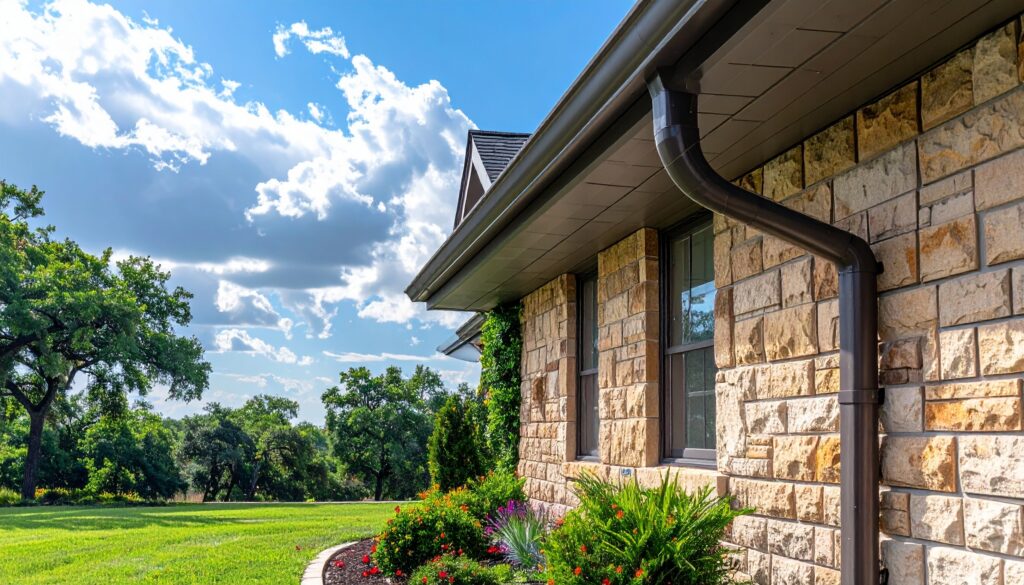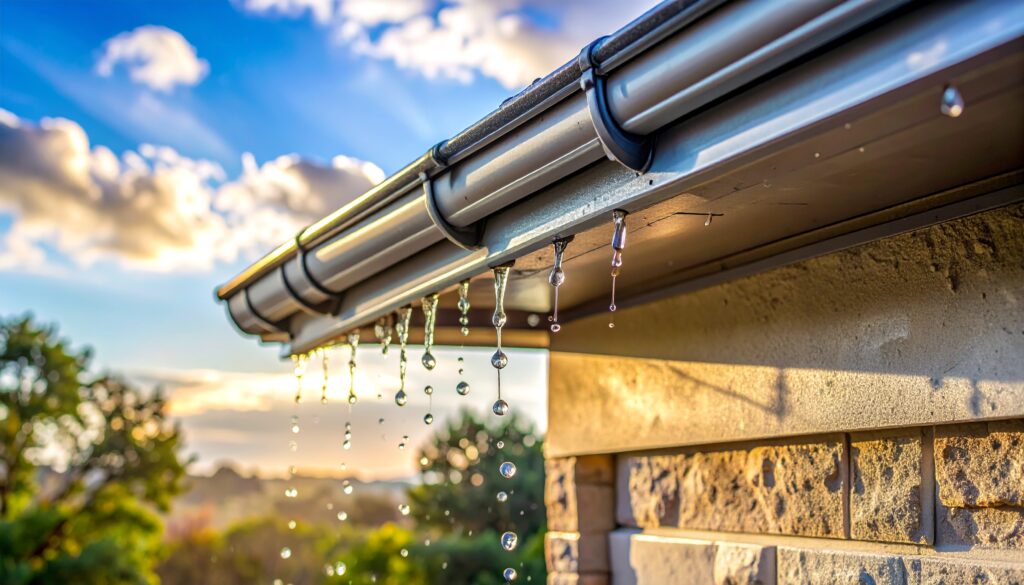
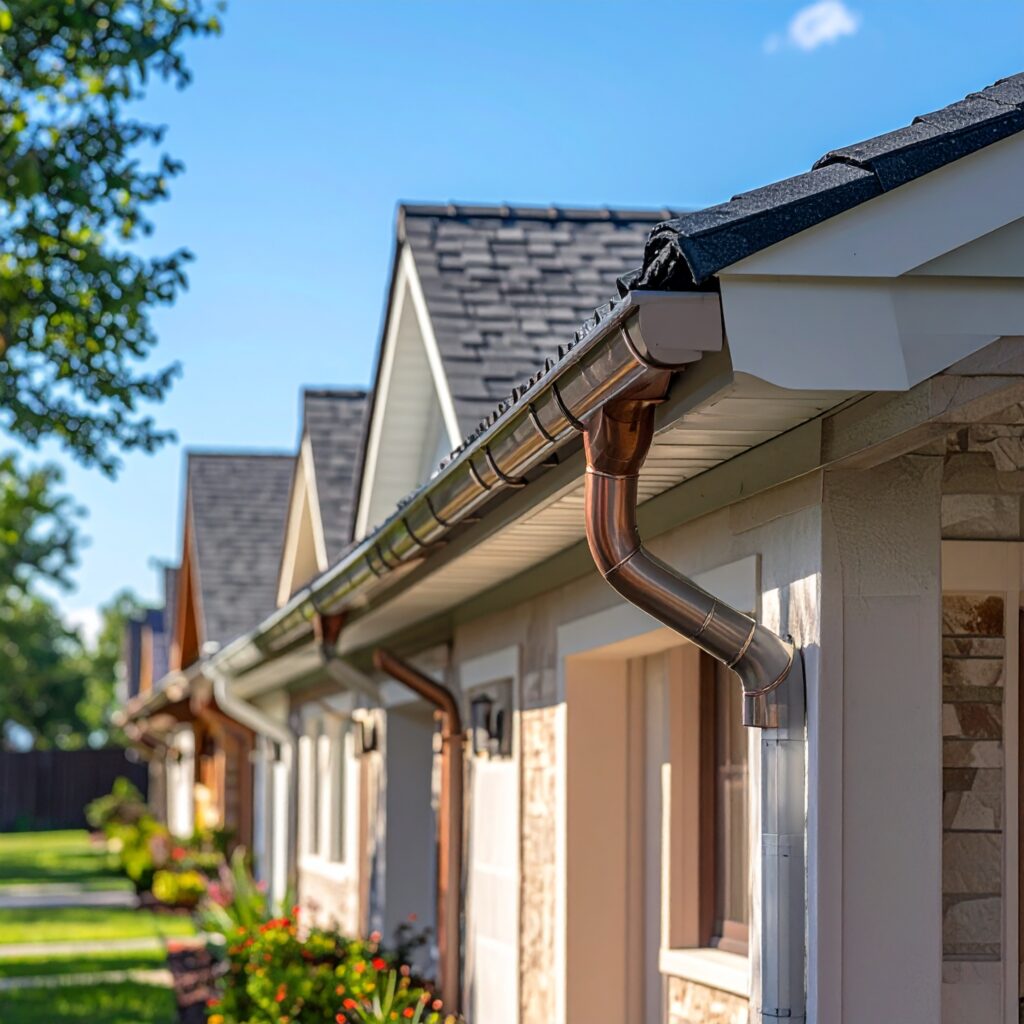

Many homes are installed with standard 2×3 downspouts. In moderate roof conditions, that size performs adequately. In higher-volume situations, a 3×4 downspout provides substantially greater discharge capacity and can improve storm performance without requiring replacement of the entire gutter run. On steeper roofs or larger roof areas, upgrading to a larger downspout is often one of the most practical ways to improve performance.

Beyond standard rectangular profiles, round downspouts offer a smooth interior wall that can improve water movement in specific architectural applications. The appropriate choice depends on both your roof geometry and the appearance you want the system to achieve.

Capacity is not the only factor; placement matters. We locate downspouts at roof concentration points, such as below valleys or along long uninterrupted runs, to reduce overflow risk. Offset geometry also affects performance. Sharp transitions and poorly aligned elbows slow movement and contribute to clogging. We use properly fabricated transitions to maintain a smooth path downward and avoid abrupt changes that disrupt flow during peak rainfall.
Water leaving the downspout must be directed away from the structure. In North Texas, where expansive clay soils can threaten home stability, proper termination is the final stage of drainage planning. Whether using extensions, splash blocks, or tie-ins to underground drains, the goal is to solve the problem rather than simply relocate it.