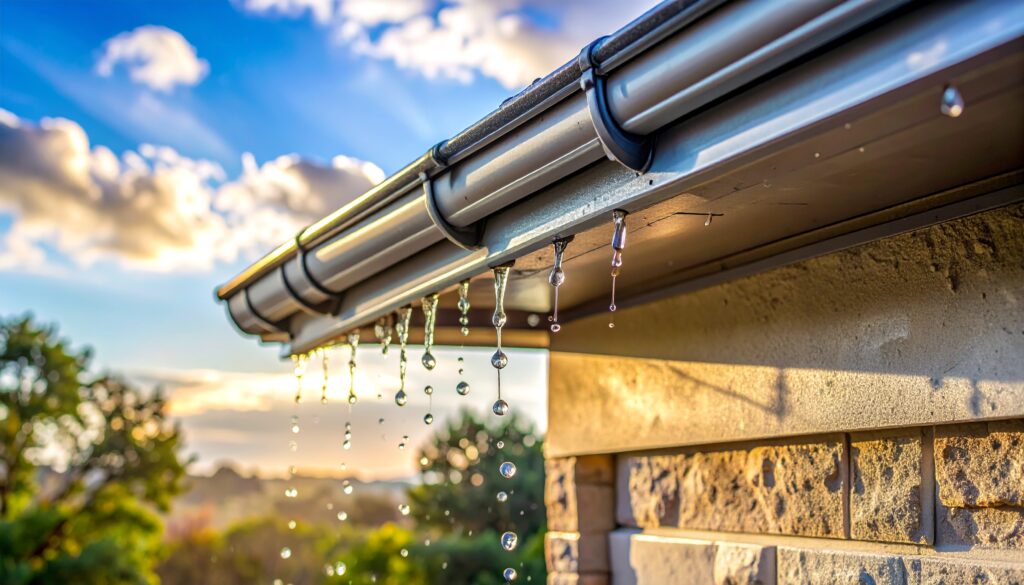
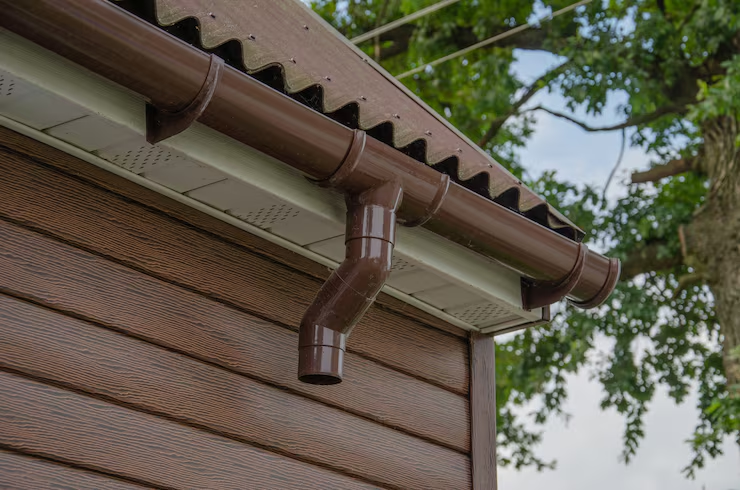
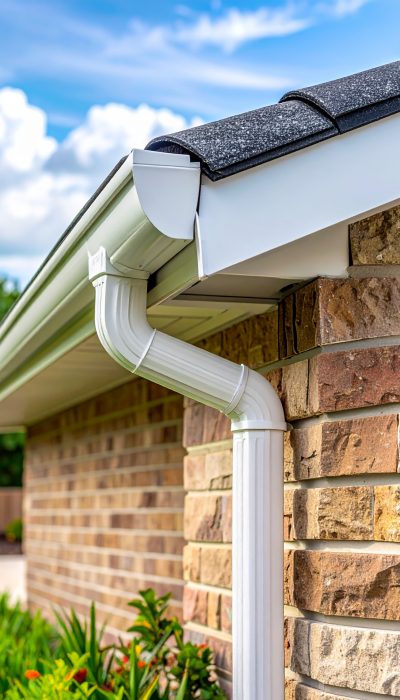
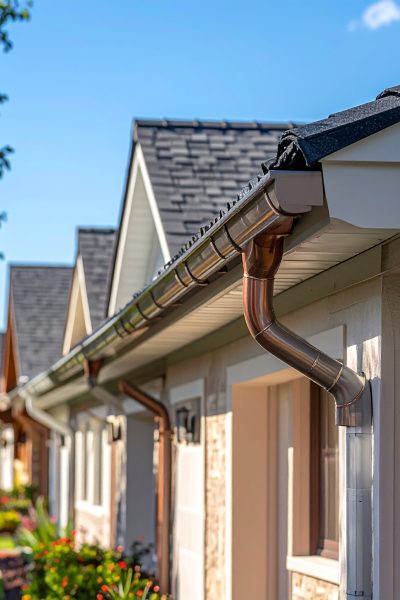
Seamless gutters are formed on-site from continuous heavy-gauge aluminum coil. Each run is measured to your home and produced as a single piece wherever possible. Fewer joints mean fewer potential leak points and a cleaner finished appearance. Corners and downspout outlets remain the only necessary connections. Our systems are available in more than 30 colors and finishes, allowing the gutter system to complement your home rather than stand out against it. Options include standard baked-on enamel aluminum finishes as well as architectural materials such as galvalume and copper when the design calls for it. These factory finishes are designed to resist fading, scratching, and weather exposure over time.
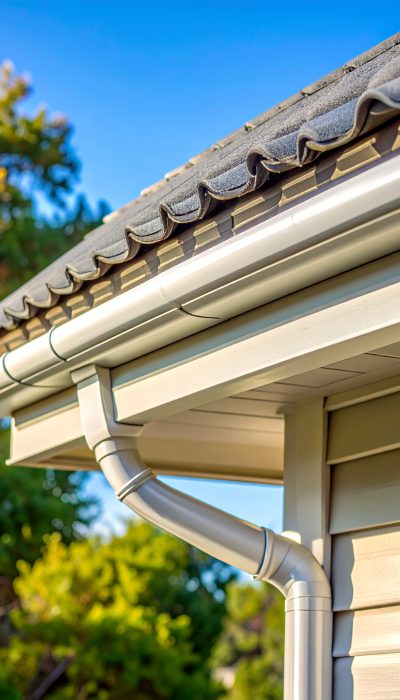
Proper sizing is where many installations succeed or fail. The difference between a 5-inch and 6-inch system is not cosmetic—it is capacity. Roof pitch, roof area, valley concentration, and local rainfall intensity all influence how much water reaches the gutter. A moderate roof with properly spaced downspouts may perform well with a 5-inch system. Steeper roof planes, larger roof areas, or concentrated valley discharge often justify a 6-inch system to increase flow capacity and reduce the risk of overflow. Although the difference may appear small, a 6-inch gutter can handle up to 40% more water than a standard 5-inch system.

The gutter collects water; the downspout removes it. If discharge capacity is insufficient, the gutter cannot empty fast enough regardless of its size. While 2×3 downspouts are standard, higher-volume situations often require 3×4 or round configurations for improved discharge capacity. We locate downspouts based on roof geometry—not just convenience—to ensure the system flows properly during peak rainfall.
A gutter must slope consistently toward its discharge points. Too little pitch allows standing water; too much affects appearance. We ensure the system is properly tucked under the roof’s drip edge to prevent water from wicking behind the gutter and damaging the fascia. Structural support also matters. A gutter filled with water becomes surprisingly heavy. We install heavy-duty hidden hangers with professional-grade fasteners to maintain alignment through seasonal expansion and North Texas storm loads.