Are Gutter Guards Worth It? An Honest Answer for Bluff Dale, TX Homeowners
Sometimes yes, sometimes no. The answer depends on your trees, your gutters' condition, and how often you are cleaning them now — not on which brand is advertised hardest.
Have a gutter question about your Granbury home?
Call (817) 326-3682Sometimes. That is the honest answer, and anyone who gives you a flat yes is selling one product.
Gutter guards are a genuinely good investment on some houses and close to a waste of money on others, and the variable that decides it is not the brand. It is your trees, the condition of the gutters you already have, and how many times a year you are currently getting up a ladder.
This is a decision worth thinking through properly, because it is the kind of purchase where the sales pressure is heaviest and the honest information is thinnest. So here is the case for, the case against, and how to tell which one applies to your house.
What Gutter Guards Actually Do
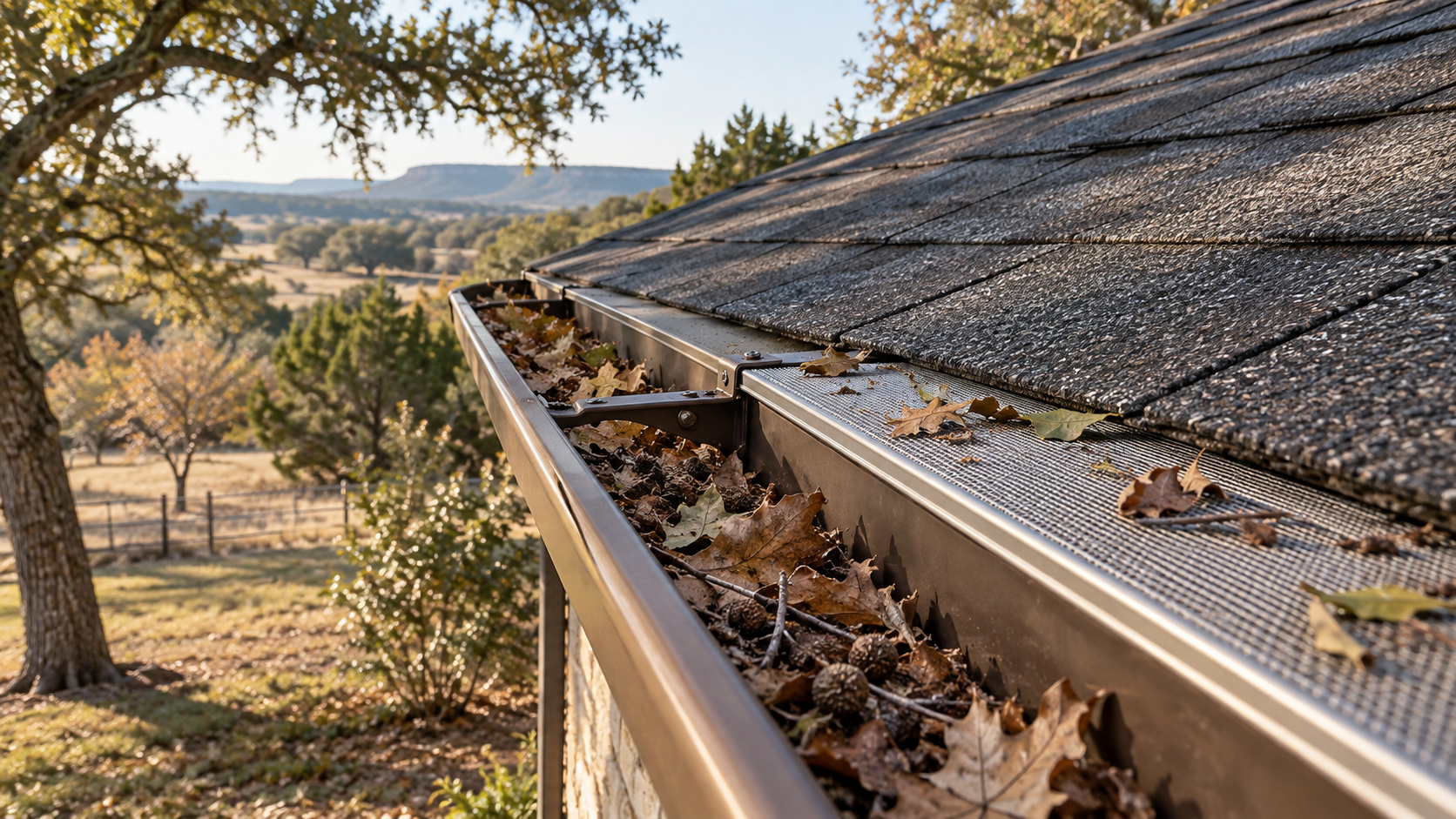
Gutter guards, sometimes called leaf guards, sit over the top of your gutters to block leaves, shingle grit, and debris while still letting water through.
That is the whole mechanism. There is nothing more sophisticated happening, regardless of how the marketing is framed.
And here is the part that gets left out of the pitch: they will not eliminate maintenance entirely. A properly fitted guard system meaningfully cuts down on how often your gutters need cleaning. It does not take the number to zero. No system is fully maintenance-free, and periodic inspection is still recommended with guards installed.
If that sounds like a downgrade from what you have been told, it is. It is also the truth, and it is the correct basis for deciding whether the purchase makes sense — because the value of a guard system is entirely in the reduction of cleaning frequency, not the elimination of it.
The Real Question: How Often Are You Cleaning Now?
This is the calculation that actually determines the answer, and it takes about ten seconds.
Homes near trees typically need cleaning multiple times a year without guards. A guard system can stretch that interval out significantly. So:
- Cleaning three or four times a year because you are under heavy canopy? Guards change your life. The reduction in visits is substantial and it compounds every year you own the house.
- Cleaning twice a year, spring and fall, like most houses? It is a reasonable call either way. Guards will likely take you to once a year plus inspection. Whether that trade is worth it depends on how much the ladder work costs you in money or in risk.
- Cleaning once a year and the gutters are never that bad? Guards are probably not your best use of money. You are buying a reduction in something that is barely happening.
Notice that nothing in that list is about the guard. It is about your trees. That is not an accident — tree cover is the single biggest determinant of whether this purchase pays off, and it is the thing a national advertiser knows nothing about when the ad reaches you.
When Gutter Guards Are Worth It
You Are Under Oaks, Pecans, or Anything That Sheds Continuously
Heavy canopy is the clearest case. A home surrounded by oaks and pecans has a debris load that overwhelms an open gutter repeatedly through the year, and cutting that load is worth real money.
Ladder Work Is a Problem for You
A single-story ranch and a two-story home with steep pitch are completely different propositions. If getting on a ladder is something you are unwilling or unable to do safely, the guard is not buying you convenience — it is buying you out of a recurring hazard or a recurring bill.
Your Gutters Are Structurally Sound
This is the condition most people skip. If your existing gutters are in good shape, guards can be a smart, lower-cost upgrade — you are protecting something that works. Gutter guards fitted to a sound system is money well spent.
You Are Already Replacing the Gutters
If the gutters themselves are failing, replacement with guards installed at the same time is usually the better long-term solution. Doing both at once means one setup, one crew, and a guard fitted to a brand-new profile rather than retrofitted to an old one.
Overflow Is Causing Actual Damage
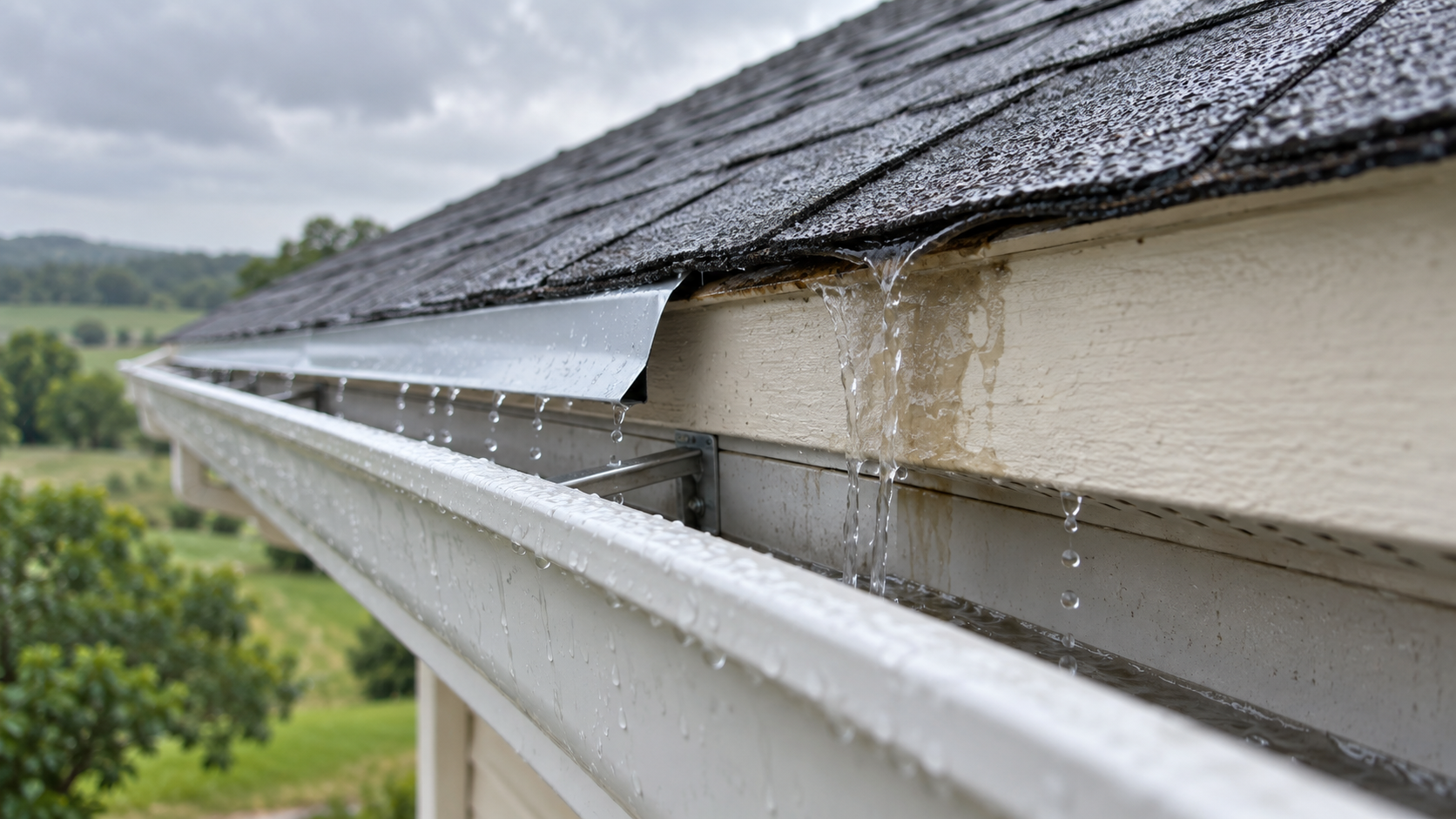
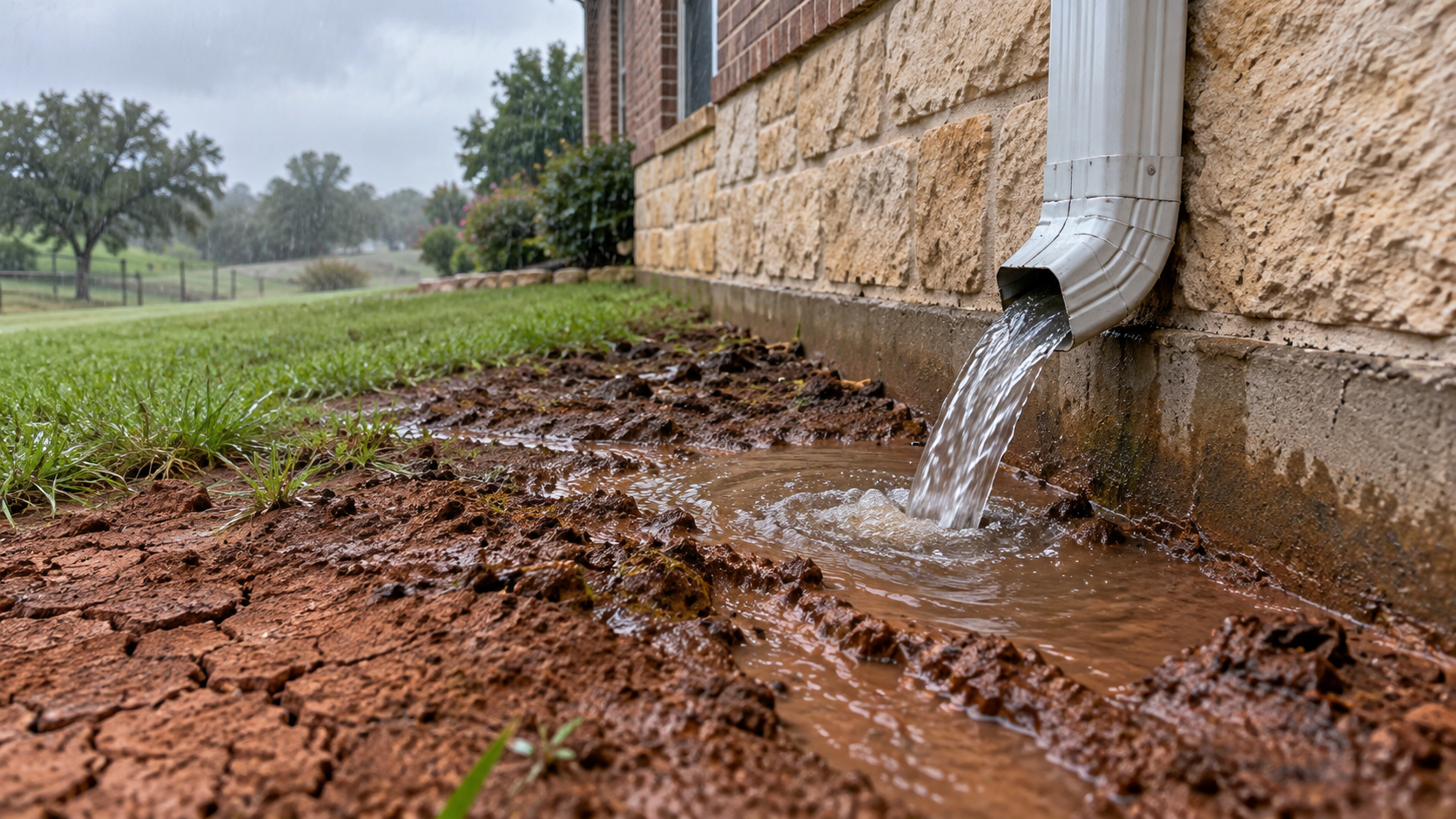
If backed-up water is spilling over the rear of the trough onto the fascia, or overflowing onto ground next to the foundation, the debris is no longer a maintenance annoyance. It is the mechanism behind damage that costs considerably more than a guard system.
When They Are Not Worth It
The more useful half of the list, and the half you will not hear from a company that sells one product.
Your Gutters Are Failing
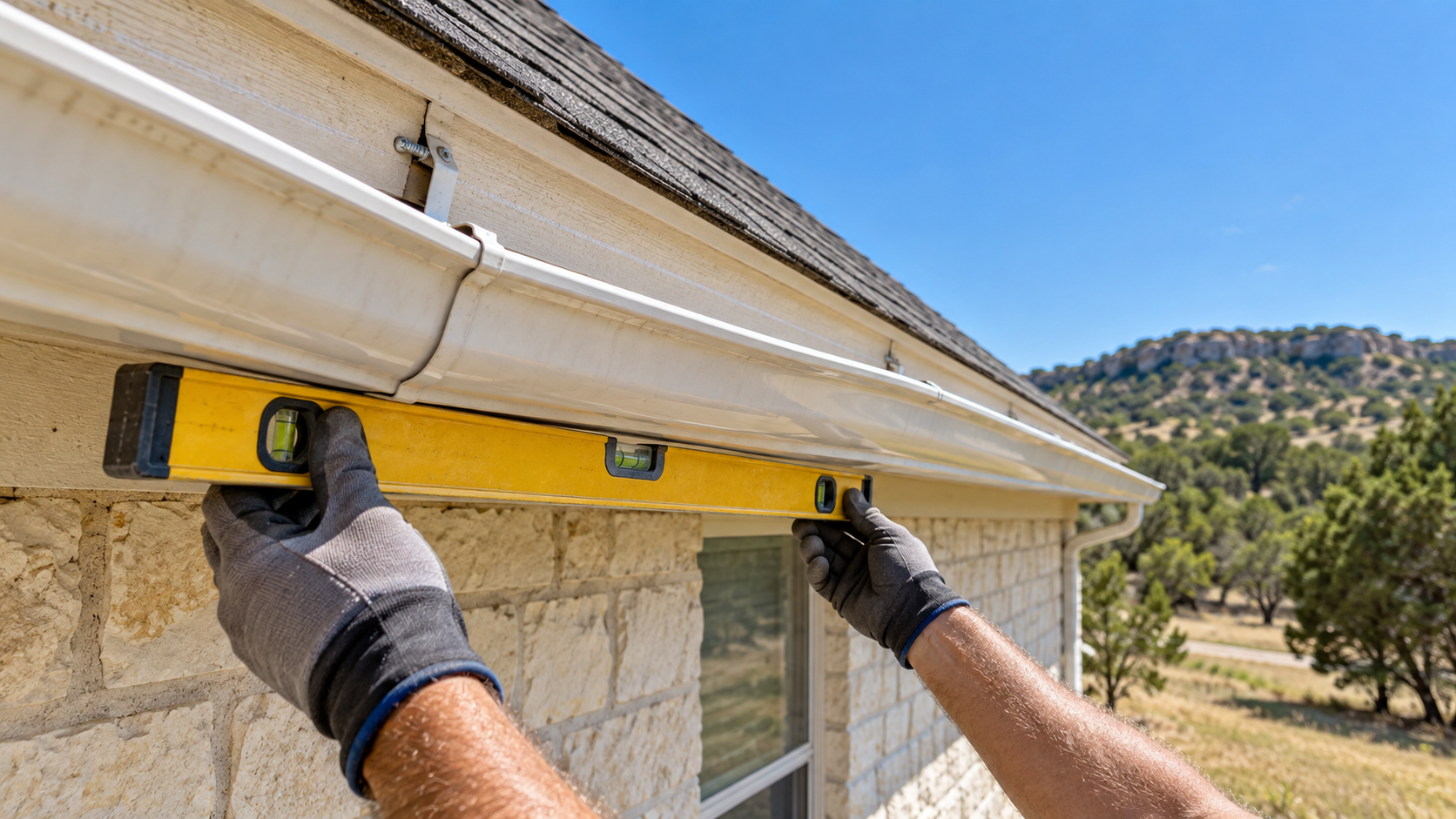
Putting guards on gutters that are sagging, pulling loose, or pitched wrong is spending money on the wrong layer. The guard does not hold the gutter up and it does not correct the slope. If the trough is the problem, fix the trough first — gutter repair or, where the system is past repair, replacement comes before any guard conversation.
You Have Almost No Tree Cover
An open lot with nothing overhanging produces very little debris beyond shingle grit and wind-blown dust. Guards on that house solve a problem you do not have.
The Real Issue Is Capacity, Not Debris
If a gutter overflows in heavy rain while perfectly clean, it does not have enough downspout capacity or the pitch is wrong. A guard does nothing for either. It will, however, let you believe you fixed something.
The Real Issue Is at the Roof Edge
Water running behind the gutter onto the fascia is often an edge-metal problem, not a debris problem. A guard addresses one cause of that and not the other. Worth diagnosing before buying.
Pine Needles and Fine Debris Are Your Main Load
This is where guard performance varies most by type. Fine debris behaves very differently from whole leaves, and a system that handles oak leaves comfortably can be defeated by needles and grit. This is not a reason to skip guards — it is a reason to be specific about what is actually landing on your roof.
Why "Which Brand?" Is the Wrong Question
Most of what you will read about gutter guards is written by companies that sell exactly one guard. That shapes the advice in a predictable direction: whatever they sell is the best one, for every house, in every condition.
We are not locked into a single gutter guard brand. Based on your roof type, tree coverage, and drainage conditions, we recommend the option that actually fits your landscape and budget.
That distinction matters more than any product comparison, because a guard is not a universally better or worse object — it is a fit problem. A home surrounded by oaks and pecans needs a different guard than one with light tree cover. Getting it right means walking the property and factoring in overhanging branches, roof pitch, and debris type before recommending anything.
You cannot do that from a call center, and you cannot do it if the answer is predetermined by what is on the truck.
What a Real Assessment Looks At
- What is actually overhanging the roof, by species and proximity — not just "are there trees."
- Roof pitch, which changes how fast water arrives and how debris moves across the guard surface.
- The debris type you get most: broad leaves, needles, seed pods, or shingle grit.
- Drainage conditions downstream, because a guard that keeps the trough clear still needs somewhere to send the water.
- Existing gutter condition and profile, which determines whether a retrofit is even appropriate.
The Categories You Will Encounter
Useful to know the landscape before anyone starts pitching. These are the general types on the market, not a menu of what any one company installs.
Screens and mesh sit over the trough and filter debris by hole size — the finer the mesh, the more it stops and the more it can eventually load up with grit. Solid or reverse-curve covers use the shape of the surface to direct water in while shedding leaves over the edge, which works well with broad leaves and less well with fine material. Insert-style products fill the trough itself with a porous material so debris rides on top.
Each trades off differently between how much it blocks, how much water it passes in a downpour, and how it behaves when it does eventually need attention. There is no category that wins on all three, which is precisely why the recommendation has to follow the property rather than the catalog.
What Guards Do Not Fix
Being explicit, because guards get sold as a solution to problems they have nothing to do with.
- They do not fix pitch. A gutter sloped wrong holds standing water with or without a guard over it.
- They do not fix sagging. Loose hangers and soft fascia are a mounting problem underneath the guard.
- They do not add capacity. Too few or undersized downspouts will still overflow.
- They do not stop water getting behind the gutter from missing or short edge metal at the roof.
- They do not eliminate cleaning. They extend the interval, which is valuable and is not the same claim.
A guard is a debris-management upgrade to a functioning system. It is not a repair.
Guards or Replacement: Which Comes First
The sequencing question, and it has a clear answer in both directions.
If your existing gutters are structurally sound, guards are a smart, lower-cost upgrade. You are extending the service life and cutting maintenance on a system that works. Guards can be added to existing gutters in most cases — the condition and profile of the current gutters determine whether they can be fitted properly, which is something to confirm during an evaluation rather than assume.
If the gutters themselves are failing, replacement with guards installed at the same time is usually the better long-term solution. Retrofitting a guard onto a system you will be tearing off in two years means paying for the same work twice.
The mistake to avoid is buying guards instead of facing a replacement you already know is coming. That is not a saving. It is a deferral with an extra cost attached.
If you are not sure which category you are in, a gutter cleaning and inspection will tell you — because the inspection is the part that establishes whether the trough, the hangers, and the pitch are sound enough to be worth protecting.
Why Bluff Dale Homes Are Usually a Guard Conversation
Bluff Dale sits along the Paluxy River, and its mix of rural acreage and riverside lots calls for gutters that hold up to both open exposure and heavier tree cover.
That combination is unusual and it is exactly why the answer here is rarely the same from one property to the next. A house on open acreage west of the river and a house tucked under riverside canopy are different decisions entirely, and they can be two miles apart.
Open, exposed lots near the river take on more wind load, which is a common cause of pulled fasteners and sagging gutters. On those properties the guard question is frequently premature — the gutters need attention first, and a guard installed over loosened hangers inherits the problem. Rural properties around Bluff Dale also often have longer, less standard rooflines, which means more linear feet of gutter and a bigger difference between a guard that fits properly and one that does not.
Under the heavier tree cover closer to the river, the calculation flips. Debris load there is high enough that the reduction in cleaning frequency is the dominant factor, and guards usually earn their cost.
Same town, opposite recommendations. Which is the whole argument for having someone walk the property.
Why October Is the Month to Decide
Timing genuinely matters on this one, for a reason that has nothing to do with sales seasons.
You are at the front edge of leaf drop. Whatever is coming off your trees this fall has mostly not come off yet — which means right now you can see the gutters' true condition, and in six weeks you will not.
That matters because the decision depends on the gutters being sound. Assessing pitch, hangers, and fascia condition is straightforward on a clear system and guesswork on a packed one. Decide now and you are installing ahead of the load. Decide in December and you have already absorbed a full season of debris and spent the cleaning visit you were trying to avoid.
If you want it looked at before the leaves are down, call (817) 326-3682 and we will walk the property.
Frequently Asked Questions
Are gutter guards worth it?
On a home under heavy tree cover with structurally sound gutters, usually yes — the reduction in cleaning frequency is substantial and it repeats every year. On an open lot with little overhanging growth, or on gutters that are already failing, usually no. The deciding factors are your tree cover and the condition of your existing gutters, not the product.
Do gutter guards really work?
They work at what they actually do, which is block leaves, shingle grit, and debris while letting water through. A properly fitted system meaningfully cuts how often gutters need cleaning. They do not make a gutter system maintenance-free, and any claim that they do is overselling it.
Do gutter guards mean I never have to clean my gutters again?
No system is fully maintenance-free. Guards significantly reduce debris buildup, but periodic inspection and occasional cleaning is still recommended. The value is in the longer interval between visits.
What are the pros and cons of gutter guards?
Pros: far less debris in the trough, fewer cleaning visits, less overflow, and less ladder work. Cons: an upfront cost, continued need for periodic inspection, performance that varies with debris type, and no benefit at all if the underlying problem is pitch, capacity, or the roof edge rather than debris.
Can gutter guards be added to my existing gutters?
In most cases, yes. The condition and profile of the current gutters determine whether guards can be fitted properly, which is worth confirming during an evaluation before committing.
Should I install guards or replace my gutters?
If the existing gutters are structurally sound, guards are a smart, lower-cost upgrade. If the gutters themselves are failing, replacing them with guards installed at the same time is usually the better long-term move — one setup instead of two, and a guard fitted to a new profile.
Which gutter guard is best?
There is no single best one, and that is not a dodge. Screens, mesh, solid covers, and inserts each trade off differently between how much debris they block, how much water they pass in a downpour, and how they behave when they need attention. The right choice follows your roof type, tree coverage, and drainage conditions.
Do gutter guards work with pine needles?
This is where guard type matters most. Fine debris behaves very differently from broad leaves, and a system that handles oak leaves well can be defeated by needles and grit. If needles are your main load, say so before anyone recommends a product.
Will gutter guards stop my gutters from overflowing?
Only if debris was the cause. If a clean gutter overflows in heavy rain, the problem is downspout capacity or pitch, and a guard will not change it.
Will gutter guards fix water running behind my gutter?
Partly, at best. Guards prevent the debris backup that pushes water over the rear lip of the trough. They do nothing about missing or short edge metal at the roof, which is the other cause. Worth diagnosing which one you have first.
Do guards work on long rural rooflines?
Yes, and fit matters more there. Longer, less standard rooflines mean more linear feet of gutter, so a guard that is slightly wrong is wrong across a much larger run. Guards fitted to the actual profile are the point.
Get an Honest Answer Before the Leaves Are Down
The right answer to this question is different on two houses on the same road. Tree cover, gutter condition, roof pitch, and where the water goes afterward all move it.
Call Granbury Gutters at (817) 326-3682 for a free on-site evaluation. We are open Monday through Friday from 8 to 5 and Saturday from 9 to 1, closed Sunday.
We will walk the property, look at what is overhanging your roof, check whether your existing gutters are sound enough to be worth protecting, and tell you plainly whether guards make sense on your house — including when the answer is not yet, or not worth it. We are not locked into a single brand, so there is no product we need the answer to be. We are a Granbury-based team, not a call center dispatching to whoever is available.
We install guards throughout Bluff Dale and the surrounding area, and you can see the rest of what we handle on our services page.