Water Getting Behind Your Gutters? Drip Edge, Gutter Apron, and the Roof Edge in Paluxy, TX
Clean gutters, no leaks, and the fascia is still rotting. When water runs behind the gutter instead of into it, the problem is at the roof edge — and drip edge is not the same thing as gutter apron.
Have a gutter question about your Granbury home?
Call (817) 326-3682You cleaned the gutters. They drain. There is no visible leak, no sag, no seam dripping. And the fascia board behind the gutter is dark, soft, and starting to come apart.
That combination confuses people, because everything about it says the gutters are working. They probably are. The water causing the damage is not going through the gutter at all — it is going behind it, and it never touched the inside of the trough on its way down.
This is one of the most commonly misdiagnosed problems we see, and it gets misdiagnosed in a specific direction: homeowners replace gutters that were fine. The gutters were never the failure point. The failure is a few inches above them, at the edge of the roof, and it usually comes down to a thin piece of bent metal that is either missing, the wrong type, or installed in the wrong order.
How Water Ends Up Behind a Gutter
Water coming off a roof does not simply fall off the edge. Some of it clings.
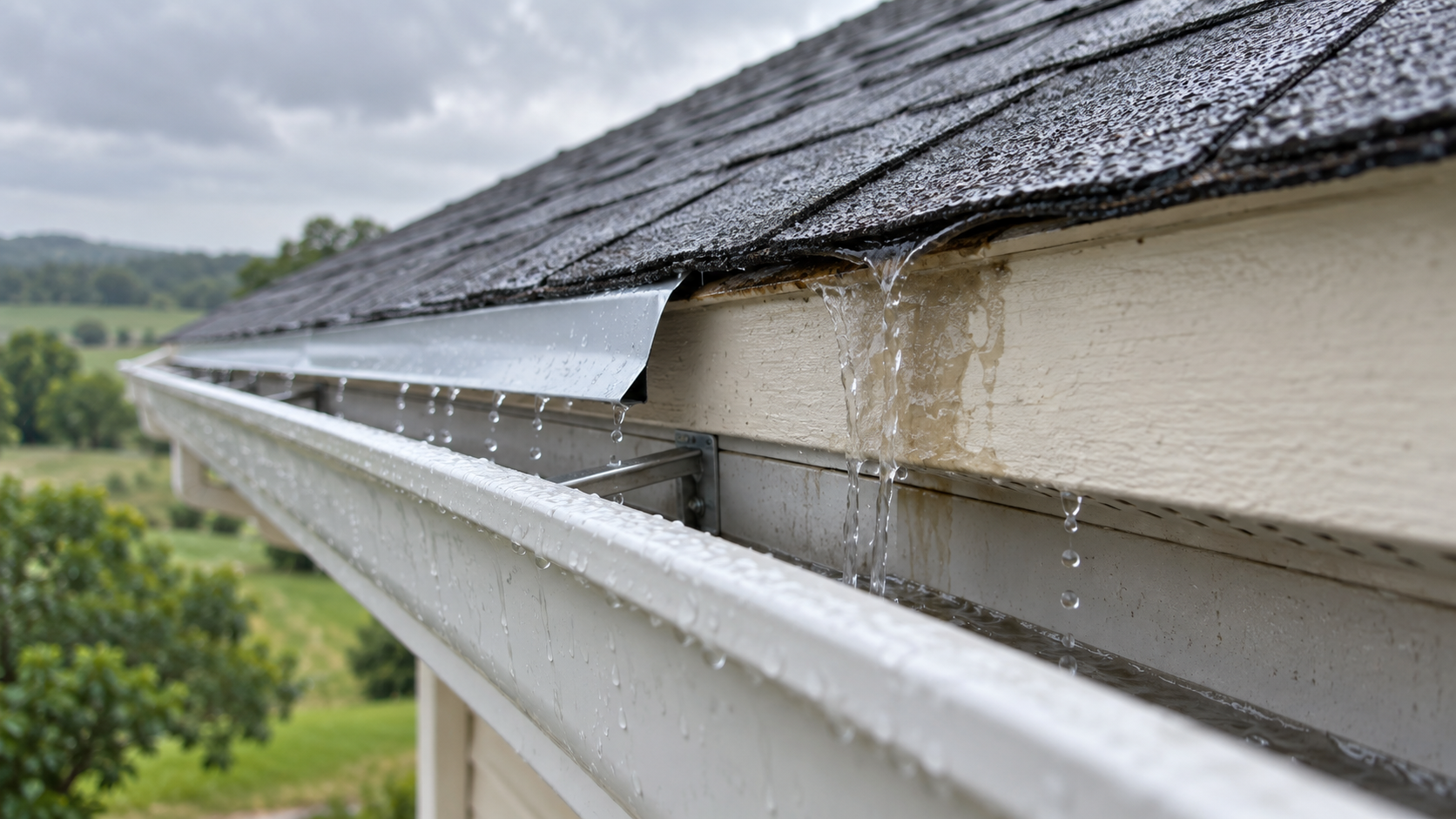
Surface tension keeps a portion of the flow attached to whatever it is running along. When water reaches the bottom edge of a shingle, part of the stream lets go and drops into the gutter, and part of it wraps around the shingle edge and continues along the underside. Where it goes next depends entirely on what is under there.
If there is properly installed metal at the roof edge, the water hits it, is forced outward, and drops into the gutter. If there is nothing — or the wrong thing — the water continues along the underside of the decking and onto the fascia board.
That wrapping flow is small compared to the volume in the gutter. It is also continuous, aimed directly at wood, and completely hidden from view. A gutter overflowing is obvious and gets fixed. Water tracking down the back of the fascia is invisible until the wood fails.
Drip Edge and Gutter Apron Are Not the Same Thing
They get used interchangeably, including by people who install them, and the difference is the entire point.
Drip Edge
Drip edge is an L-shaped piece of metal at the perimeter of the roof. One leg goes up under the roofing material, the other turns down over the edge of the decking and fascia. Its job is to move water off the roof edge and away from the wood, and to give the roofing a clean, supported termination.
Standard drip edge has a short outward kick at the bottom. On a roof without gutters, that is enough — water clears the fascia and falls free.
Gutter Apron
Gutter apron does the same basic job with a different geometry. Instead of a short kick, it has a long, extended lower leg that bends out and downward, far enough to reach over the back edge of the gutter and deliver water inside the trough.
That extension is the difference. Drip edge gets water off the roof edge. Gutter apron gets water off the roof edge and into the gutter.
Why It Matters When Gutters Are Involved
On a house with gutters, the gutter is mounted to the fascia, which means its back edge sits against or very near the wood. Standard drip edge with its short kick often releases water at a point behind the gutter's back edge rather than in front of it. The metal did its job and still delivered water to the wrong side of the gutter.
Gutter apron, or drip edge with an adequately extended leg, is what bridges that gap. When people say a roof "needs gutter apron," this is what they mean: the existing metal stops short of the gutter, so water falls into the space between them.
Five Reasons Water Gets Behind a Gutter
1. There Is No Edge Metal At All
On older homes, the roof edge may have nothing under the shingles but the decking and the fascia. Shingles were run to the edge and that was the end of it. Every rain sends a share of the runoff straight onto bare wood, and paint is the only thing slowing it down.
2. There Is Drip Edge, But It Stops Short
The most common version of this problem. Edge metal is present and correctly installed, but its lower leg does not extend far enough to clear the back of the gutter. Water leaves the metal and falls into the narrow gap between the gutter and the fascia.
3. The Layering Is Wrong
Edge metal has to go under the roofing material so that water running down the shingle passes over the metal. If it was installed on top of the shingles, water runs under it instead of over it, and the metal becomes a channel directing water at the fascia rather than a shield protecting it.
4. The Gutter Sits Too Low
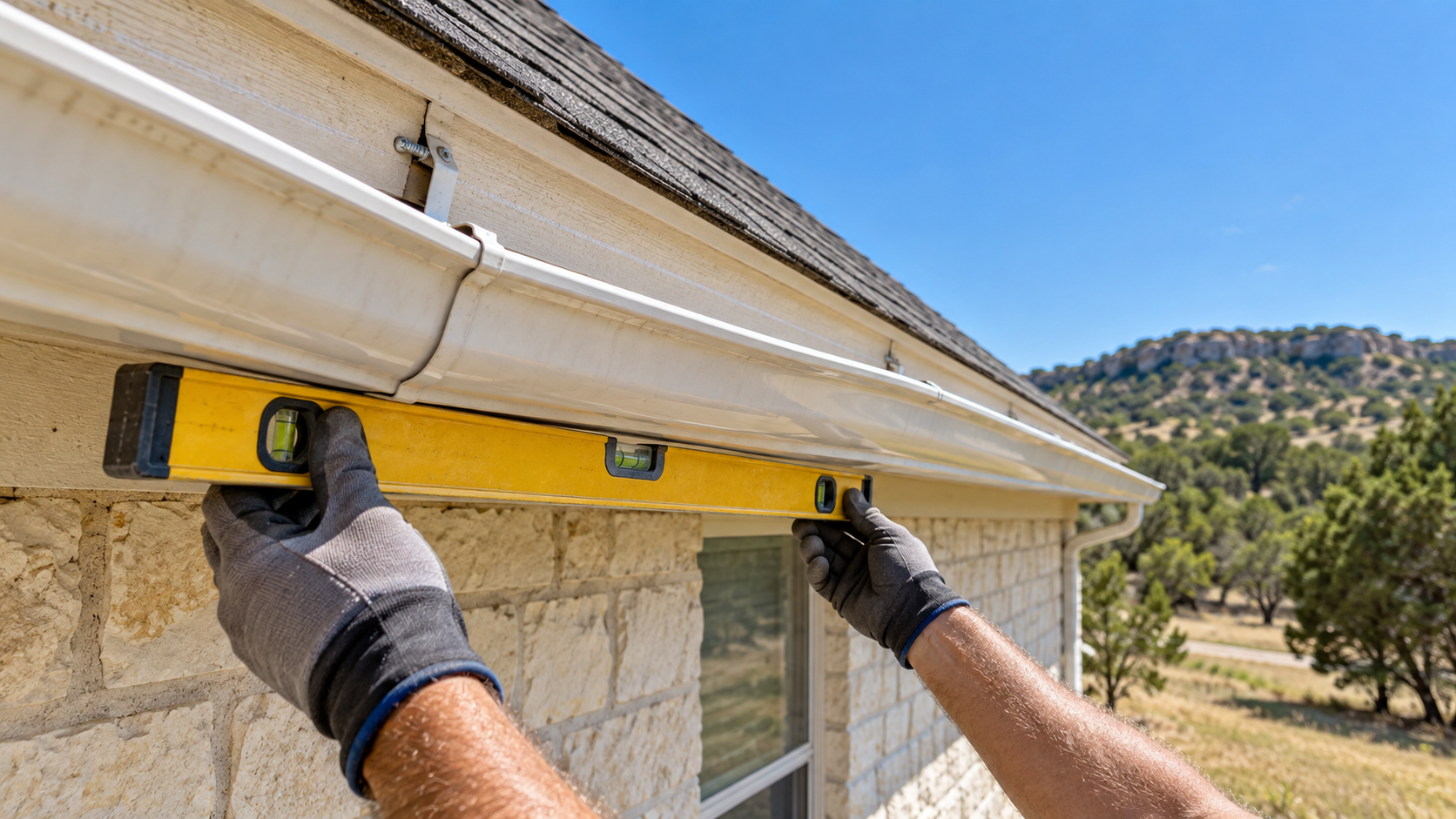
A gutter hung below the natural line of the roof edge lets water shoot over the back or drop into the gap. This is a positioning problem rather than a roofing one — and it is squarely a gutter issue. It is also why the relationship between the roof edge and the gutter matters at installation, not as an afterthought.
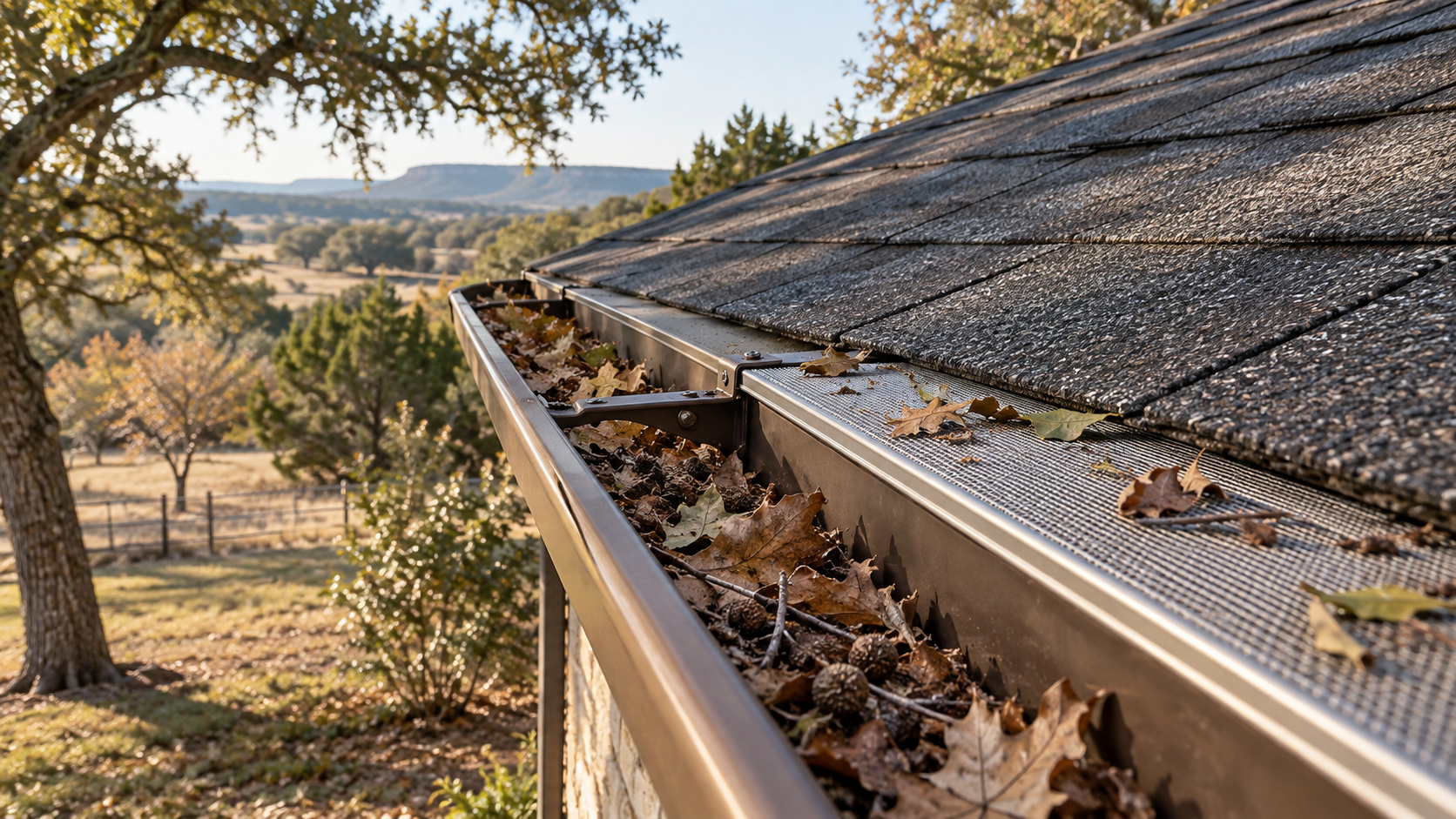
5. Debris Backs Water Up Over the Rear Lip
A gutter packed with leaves does not just overflow forward. Water backs up inside the trough, rises above the rear lip, and spills backward onto the fascia — the worst possible direction. Under heavy tree cover this is the mechanism that does the damage, and the fix is keeping the trough clear rather than touching the roof edge at all. Regular gutter cleaning is the whole of the solution in that case.
How to Tell If This Is Your Problem
You can check most of it from the ground and a ladder, without getting on the roof.
Look at the Fascia Behind the Gutter
Dark streaking, peeling paint, or soft wood on the board the gutter is screwed to. If the wood is deteriorating behind a gutter that does not leak, water is reaching it from above.
Check the Gap
From a ladder at the end of a run, look at the space between the gutter's back edge and the fascia. You should see metal extending down over that gap. If you can see straight down into a gap onto bare wood or into the fascia, water can go there too.
Watch a Run During Rain
The most direct test available. Stand back and watch a gutter during a steady rain. Water should enter the trough. A visible sheet or drip line running down the fascia below the gutter line means it is not all making it in.
Look at the Soffit
Staining, sagging, or bubbling on the underside of the eave means water has been getting past the fascia for a while. That is a later-stage symptom and it shortens the timeline for doing something about it.
Check Whether the Hangers Are Holding
Water-damaged fascia loses its grip on screws. Gutters pulling loose from a soft board are a symptom of this problem, not a separate one — and rehanging them into wood that is already compromised will not hold. Gutter repair has to start with whether the mounting surface is still sound.
What the Damage Actually Costs You
The order of failure is predictable.
- Paint first. Blistering and peeling on the fascia. Cosmetic, and the only cheap stage.
- Then the fascia board. Wood softens, then rots. It is also the structural attachment point for the gutters, so its failure takes the gutter system with it.
- Then the soffit. Water travels along the underside of the eave, staining and delaminating it.
- Then the roof decking edge. The outer few inches of sheathing degrade, which compromises the nailing surface the roofing depends on.
- Then the interior. Water that gets past the eave into the wall cavity or attic stops being an exterior problem.
The first two stages are inexpensive to address. The last two are not. The reason this problem is worth understanding is entirely about which stage you catch it in.
Where Gutters End and Roofing Begins
Worth being clear about, because this problem sits on a line between two trades.
Edge metal under the shingles is part of the roof. Installing or replacing drip edge means lifting roofing material, and that is a roofer's work. We are a gutter company and we will not pretend otherwise.
What is ours:
- Telling you which problem you have. During a free on-site evaluation we can look at the roof edge, the gap, the fascia condition, and the gutter position and tell you whether you are looking at missing edge metal, a gutter hung too low, or a debris problem. That distinction determines who you need to call, and it is the part most homeowners get wrong.
- Gutter position. How high the gutter hangs relative to the roof edge is a gutter decision. If the trough is sitting below where water actually leaves the roof, that is correctable without touching the roofing.
- Getting it right on a new install. When we hang gutters, the relationship between the roof edge and the back of the trough is something we account for rather than discover later. On a gutter replacement we are already working at that edge and can see the condition of the fascia and the existing metal while the old gutters are down — which is the best look anyone gets at it.
- Keeping debris from causing it. Backed-up water spilling over the rear lip is a gutter problem with a gutter solution. A fitted gutter guard system addresses the cause directly.
What is not ours: lifting shingles to install drip edge. If that is what your roof needs, you need a roofer, and we will tell you so plainly rather than selling you gutters to cover a roofing gap.
Why Paluxy Homes See More of This
Paluxy is a small community along the river of the same name, with homes set among heavier tree cover than much of the surrounding area.
That canopy is the reason this matters here more than on an open lot. Heavy tree cover means a gutter that fills faster and stays damp longer, and a full trough is exactly what pushes water back over the rear lip onto the fascia. River-adjacent moisture and tree cover speed up wear on hangers and seams around Paluxy, and the same conditions accelerate what happens to a fascia board that is getting wet on a regular basis. Wood that never fully dries out fails considerably faster than wood that gets wet and then dries.
It compounds, too. Debris backs water up, water reaches the fascia, the fascia softens, the hangers lose their grip, the gutter drops slightly out of position, and the drop widens the gap the water was already exploiting. Each stage makes the next one easier.
September Is the Right Month to Look
Two reasons, both practical.
You are ahead of leaf drop rather than behind it. Whatever is going to fill the gutters this fall has not fallen yet, so anything you find now is baseline condition and not a temporary blockage.
And you can still see the damage. Once the trough is packed and the fall rains are running, a wet fascia board is difficult to distinguish from an overflowing gutter. Right now the two look different, which makes the diagnosis considerably easier.
If you are getting a pre-season cleaning anyway, that is the moment to have someone look at the roof edge while the ladder is already up. The marginal cost of looking is nothing, and it is the only time of year the answer is unambiguous.
If you want it looked at before the leaves drop, call (817) 326-3682 and we will take a look at the roof edge while we are there.
Frequently Asked Questions
What is the difference between drip edge and gutter apron?
Both are metal installed at the roof edge under the roofing material. Drip edge has a short outward kick and is designed to shed water off the edge. Gutter apron has a long extended lower leg that reaches out over the back of the gutter and delivers water inside the trough. On a house with gutters, that extension is what keeps water from falling into the gap.
Do I need gutter apron if I already have drip edge?
Possibly. It depends on whether the existing drip edge extends far enough to clear the back edge of your gutter. If water is reaching the fascia behind a gutter that drains properly, the answer is usually yes.
Why is water running behind my gutters?
Five common causes: no edge metal at all, edge metal that stops short of the gutter, edge metal installed on top of the shingles instead of underneath, a gutter hung too low relative to the roof edge, or debris backing water up over the rear lip of the trough.
Can water behind the gutter damage my fascia?
That is the primary damage it does. The fascia is the board the gutter mounts to, and it is directly in the path. Failure progresses from paint, to the fascia board, to the soffit, to the edge of the roof decking.
Does drip edge go under or over the shingles?
Under, so that water running down the roofing passes over the top of the metal and is carried away from the wood. Installed on top of the shingles, it channels water underneath itself and directs it at the fascia instead — the opposite of its purpose.
Will new gutters fix water getting behind my gutters?
Only if the cause was the gutter's position or condition. If the cause is missing or short edge metal at the roof, new gutters will not change anything, and a company that sells you a full replacement without checking the roof edge has not diagnosed the problem.
Can a gutter company install drip edge?
Installing edge metal requires lifting roofing material, which is roofing work. We can identify whether that is what your roof edge needs, and we handle the gutter side — position, hangers, and keeping debris from backing water up — but the shingle work belongs to a roofer.
How do I check for this without getting on the roof?
Look at the fascia behind the gutter for staining, peeling paint, or soft wood. From a ladder, check whether metal extends down over the gap between the gutter and the fascia. Then watch a run during a steady rain and see whether any water is running down the fascia instead of into the trough.
My gutters are pulling away from the house. Is this related?
Often, yes. Water-damaged fascia will not hold screws. Gutters sagging or pulling loose from a soft board are a symptom of moisture reaching the wood, and rehanging them without addressing the condition of that board will not last.
Do gutter guards help with this?
They help with the debris cause specifically. A guard system that keeps the trough clear prevents water from backing up and spilling over the rear lip. It does nothing about missing edge metal at the roof, which is a separate problem with a separate fix.
How urgent is this?
It depends on the stage. Peeling paint gives you time. Soft or rotting fascia means the gutter's attachment point is already compromised. Soffit staining means water has been getting past for a while. The cost difference between the early and late stages is the reason to look now rather than next spring.
Get the Roof Edge Checked Before the Leaves Drop
If your gutters are clean and draining and the wood behind them is still going bad, the answer is above the gutter, not in it. Replacing a working gutter system will not solve it.
Call Granbury Gutters at (817) 326-3682 for a free on-site evaluation. We are open Monday through Friday from 8 to 5 and Saturday from 9 to 1, closed Sunday.
We will look at the roof edge, the gap behind the trough, the condition of the fascia, and where your gutters are hung, and tell you which of the five causes you are dealing with — including when the answer is that you need a roofer rather than us. We are a Granbury-based team, not a call center dispatching to whoever is available, and getting the diagnosis right matters more than getting the work.
We serve Paluxy and the surrounding communities from our shop at 1019 Davis Road in Granbury. More answers to common questions are on our FAQ page.