Repair or Replace? How to Tell When Weatherford, TX Gutters Need More Than a Fix
Some gutter problems are a one-hour fix and some mean the system is finished. How to tell the difference, how long gutters actually last, and what drives the cost either way.

Have a gutter question about your Granbury home?
Call (817) 326-3682February is when Weatherford homeowners find out what winter did. The freezes are behind you, the spring storms have not arrived yet, and the gutters are sitting there telling you something. The hard part is knowing whether what you are looking at is a ninety-dollar problem or the end of the system.
Contractors do not always help with this. It is easier to sell a full replacement than to explain why three hangers and a pitch correction will carry you another eight years. So here is the honest version: most gutter problems are repairs. The aluminum in a gutter system outlasts the hardware holding it up, which means the parts that fail first are usually the cheap parts. But there is a real point where repair stops being the better deal, and it is worth knowing where that line sits before someone else draws it for you.
If you want a straight answer on your own house, call us at (817) 326-3682 for a free on-site evaluation.
The Short Answer
If the aluminum itself is still sound and the problems are limited to hangers, seams, pitch, or downspouts, repair is usually the more cost-effective option.
Everything else in this guide is detail on how to tell whether that condition is met.
How Long Gutters Actually Last
Life expectancy depends far more on maintenance and water management than on the calendar.
- Seamless aluminum is the standard for residential work in North Texas. Properly hung, kept clear, and draining correctly, a seamless aluminum system is a decades-long component of the house, not a short-term one.
- Galvanized steel, common on older homes around Weatherford's downtown square, rusts. Once it is rusted through, it is finished. There is no repair for a trough with holes in it.
- Vinyl becomes brittle under Texas UV exposure and cracks at the joints. It is the shortest-lived option here.
- Hangers and fasteners are the real clock. They fail long before the trough does, from age, wind load, or ice buildup.
- Fascia board is the other clock, and it is the one people miss. Wood that stays wet goes soft, and soft wood cannot hold a gutter no matter how good the gutter is.
The practical takeaway: a twenty-year-old aluminum system that has been cleaned and repaired as needed can be in better shape than an eight-year-old system that has been overflowing into the fascia since the day it went up.
Problems That Are Almost Always a Repair
None of the following means you need a new system.
- Loose, missing, or backed-out hangers. The most common call we get, and the cheapest to fix.
- One or two sagging sections on a run that is otherwise straight and sound.
- A separated seam or corner on a sectional system.
- A split, dented, or detached downspout. Downspouts are replaceable individually.
- Lost pitch on an intact run, which means re-hanging that run to a proper fall.
- A blocked outlet that is holding water in the trough.
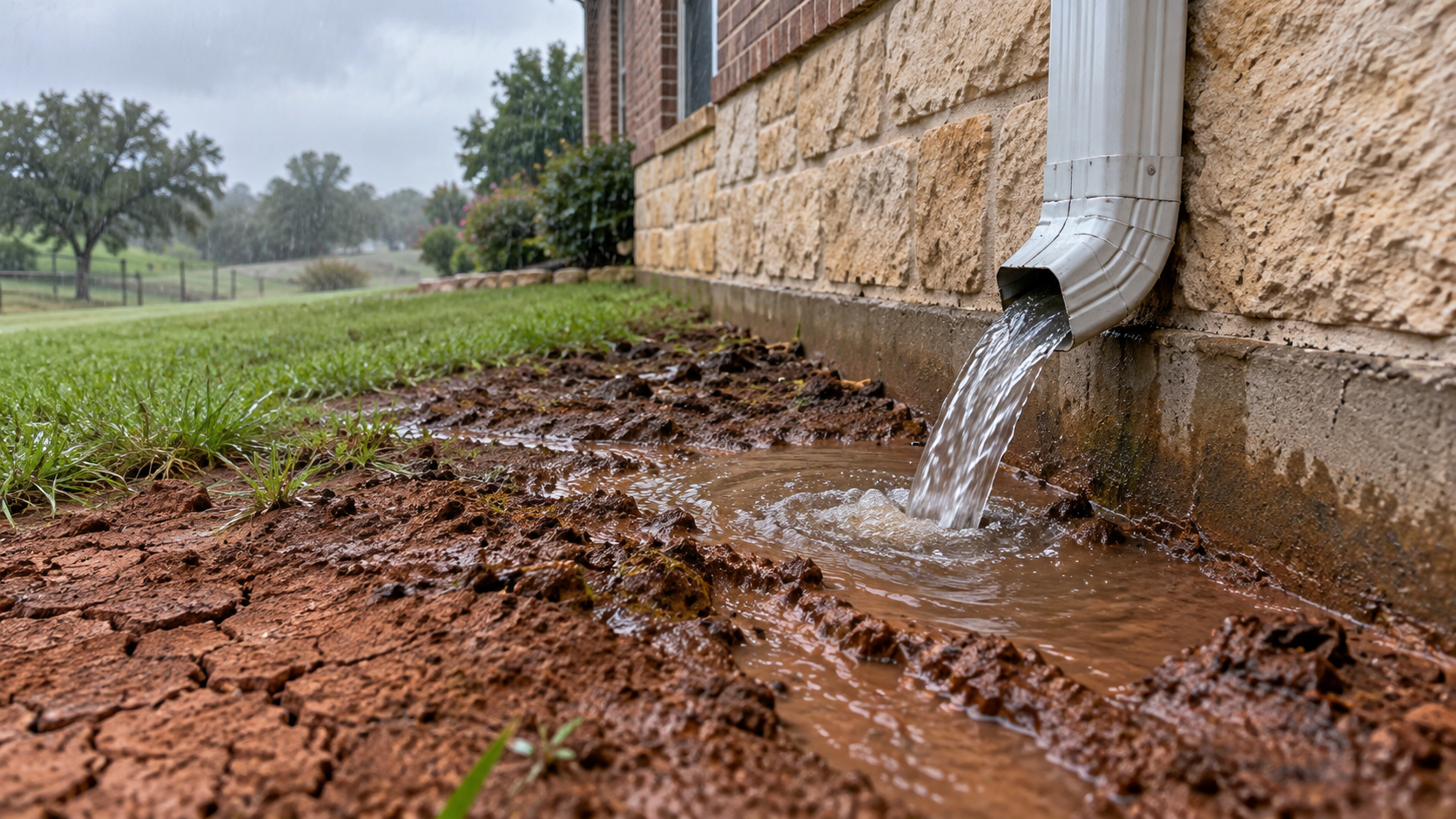
- Downspouts discharging too close to the house, which we reroute, extend, or re-secure so water discharges well away from your foundation.
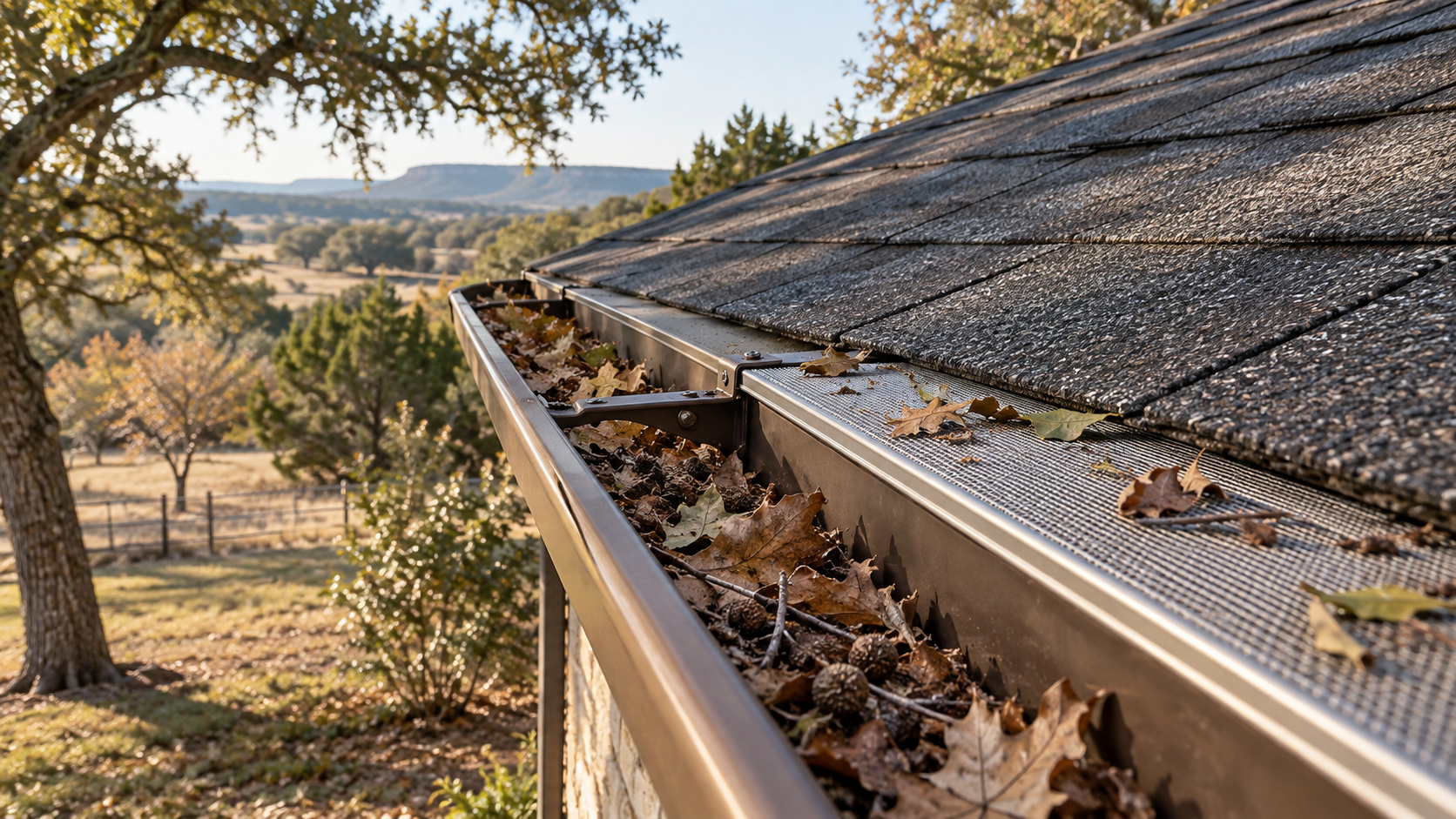
- Debris load and overflow on a system that is structurally fine and simply needs a thorough cleaning.
If a contractor quotes a full replacement for any single item on that list without showing you something else wrong, get a second opinion. Our gutter repair and downspout repair work exists precisely because these are fixable.
Signs You Need New Gutters
These are the conditions where replacement is the better value, not the upsell.
- Rusted through. Pinholes or rust perforation in steel gutters cannot be repaired. Patching buys a season at most.
- Deformed aluminum across significant lengths. Crushed, crimped, or badly dented runs will never drain correctly again.
- Worn-out fastener holes. When a run has been re-secured several times, the fascia and the gutter flange are both full of enlarged holes with nothing solid left to bite.
- Multiple runs sagging at once. One sag is a repair. Four sags on four elevations is a system at the end of its service life.
- Chronic repeat repairs. If you are fixing the same sections every year, you are paying for a replacement in installments and not getting one.
- Undersized for the roof. A system that overflows in ordinary rain even when perfectly clean was never big enough. No repair fixes a capacity problem.
- Too many failing joints. On sectional gutters, once sealing joints has become an annual chore, the joint count is the problem.
- Separating from the fascia along a whole elevation, which usually means the board behind it has gone.
Older Weatherford homes are where we see the clearest cases. When an older home's gutters are rusted through or undersized, a right-sized seamless system replaces the old setup for good rather than postponing it. A gutter replacement is worth pricing alongside the repair whenever you recognize two or more items on this list.
The Capacity Problem Nobody Mentions
This is the single most misdiagnosed gutter issue, and it is worth its own section because homeowners keep paying to repair something that was never broken.
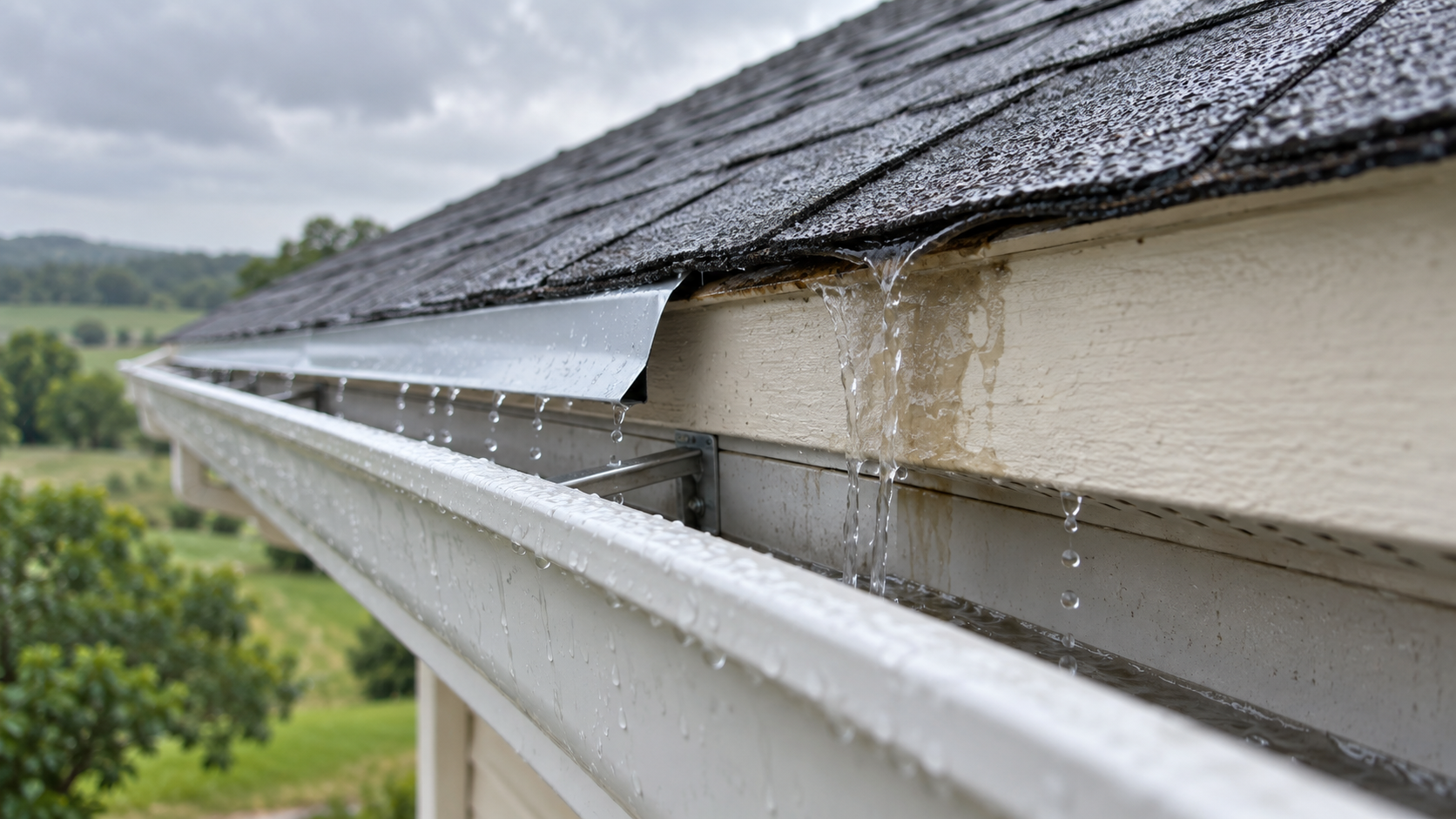
If your gutters overflow during heavy rain while they are completely clean, correctly pitched, and firmly hung, then nothing is wrong with them. They are simply too small for the water your roof delivers.
Capacity is driven by:
- Roof area draining into each run. A long run collecting from a large plane moves far more water than the footage suggests.
- Roof pitch. A steeper roof delivers water faster, which means it arrives at the gutter with more velocity and less time to turn the corner into the trough.
- Trough size. Five-inch and six-inch are the common residential profiles, and the difference in the volume they carry is substantial, not marginal.
- Downspout count and size. Often the real bottleneck. A correctly sized trough with too few outlets still backs up.
- Valleys. Roof valleys dump concentrated water at one point, and that point needs handling.
Weatherford's mix of historic homes near the downtown square and newer neighborhoods further out means no two gutter jobs look quite the same, and roofline geometry is exactly why. Irregular rooflines on older homes are the ones most likely to have been fitted with a generic system that does not match how the roof actually sheds water.
If you have been cleaning a gutter twice a year and it still overflows every storm, ask for a sizing assessment rather than another repair.
Fascia: The Thing That Decides the Answer
More repair-or-replace calls turn on the condition of the fascia board than on the condition of the gutter.
The fascia is the horizontal board along the roof edge that the gutters hang from. Every hanger transfers the weight of the trough, the water, and any debris into that board. When water has been running down the face of it for years, it goes soft, and soft wood will not hold a fastener.
This is why re-hanging a sagging gutter into rotted fascia fails within a season, and why each attempt leaves another hole in a board that is already compromised.
How to check from the ground:
- Paint blistered, peeling, or discolored in a band directly below the gutter line
- The board looks darkened, streaked, or stained
- A visible gap between the back of the gutter and the board
- Fastener heads sitting loose or holes that look enlarged
- A section that has been re-secured before and has dropped again
Fascia and trim damage should be repaired first in either scenario. We point out wood rot and soft spots during the estimate so you know the real sequence before you commit to anything, including whether a trim carpenter needs to go before we do.
What Drives the Cost Either Way
We give a specific number after seeing the house, not before, and we would rather explain the variables than publish a figure that turns out wrong on your roofline. What you are actually paying for:
On a repair:
- How many hangers or fasteners need replacing, and their spacing
- Whether pitch has to be corrected, which means re-hanging a run rather than adjusting a bracket
- Number of seams or corners to address
- Downspout work, including rerouting or extending discharge
- Whether fascia repair has to happen first, which is separate work
On a replacement:
- Total linear footage of roofline
- Gutter style and profile, including whether you want traditional or half-round rather than standard K-style
- Trough size, since going up a size to solve a capacity problem costs more than matching what was there
- Number and placement of downspouts
- Whether gutter guards are added at the same time
- Removal and disposal of the old system
- Any fascia or trim repair uncovered once the old gutters come off
Two things are worth knowing. First, adding guards during a replacement is cheaper than adding them later as a separate visit. Second, replacing gutters before a roof replacement is backwards. If a new roof is in your near future, sequence the roof first.
Most residential homes are fitted with new seamless gutters in a single day, so a replacement is less disruptive than homeowners expect.
Why Seamless Changes the Math
If you are replacing, the joint count is the thing that determines how much maintenance you are signing up for.
Seamless aluminum gutters are fabricated on-site and formed to the exact length of each section, so a straight run has no mid-run joints at all. Joints exist only at corners and outlets, where they can be properly detailed.
That matters for the repair-or-replace decision in a specific way: every seam is a future repair. A sectional system with a dozen joints per elevation gives you a dozen places for freeze-thaw cycling, thermal movement, and sealant failure to find a weakness. Removing the joints removes most of the future service calls.
It is also why a sectional system that is failing at the joints is frequently a better candidate for replacement than for one more round of sealing.
What We Check During the Free On-Site Evaluation
Winter damage and age-related failure are easy to misdiagnose from the ground, because the visible symptom and the actual cause are often at opposite ends of a run. We go through the system in order:
- Every hanger and fastener along each run, for grip and spacing
- Condition of the fascia board behind the gutter, probing for soft spots
- Actual pitch of each run, measured rather than eyeballed
- Every seam, corner, and end cap
- Whether the trough is sound, or rusted, dented, or deformed
- Trough and downspout sizing against the roof area draining into them
- Downspout condition, attachment, and where each one discharges
- Debris load and the condition of any existing guards
- Overflow evidence on fascia, soffit, siding, and at the foundation
You get an honest on-site estimate at the end, with a clear answer on repair or replacement and the reasoning behind it. We travel to Weatherford from our Granbury office, and we are a Granbury-based team rather than a call center dispatching to whoever is available, so the person who looks at your roofline is the person who explains it.
How to Vet the Answer You Get
Whoever you call, including us, should be able to do this:
- Show you the actual failure. Photos of the loose hanger, the rusted section, the soft fascia. Not a general statement that the system is old.
- Explain why repair will or will not hold. "The fascia is soft here, so a new screw has nothing to bite" is a reason. "They're shot" is not.
- Quote the repair as well as the replacement when both are genuinely viable, so you can compare.
- Separate fascia work from gutter work in the scope, since they are different trades and different costs.
- Address sizing if you have told them the gutters overflow when clean.
- Not upsell you materials you do not need. One of our customers watched a competitor wait for our truck to leave and then knock on the door to pitch upgraded materials a homeowner did not need. You can read what our customers say about that on our reviews page, where we hold a 4.9 out of 5 on Google.
Frequently Asked Questions
How do I know if my gutters need to be replaced or just repaired?
The test is whether the trough itself is sound. If the aluminum is still in good condition and the problems are limited to hangers, seams, pitch, or downspouts, repair is usually the more cost-effective option. Replacement makes more sense when the metal is rusted through or deformed, when several runs are sagging with worn-out fastener holes, when the system is undersized for the roof, or when you are repairing the same sections year after year.
How long do gutters last?
Long enough that age alone is a poor reason to replace them. Seamless aluminum, kept clear and draining properly, lasts for decades. Galvanized steel on older homes eventually rusts through and at that point cannot be repaired. Vinyl has the shortest life here because Texas UV exposure makes it brittle. In practice, the hangers and the fascia board fail well before the trough does, and maintenance history matters more than the install date.
Is it cheaper to repair or replace gutters?
A repair is almost always cheaper on the day. The question is how many repairs you are going to make. Replacing three hangers on a sound system is obviously the better value. Making the fourth annual repair to the same failing sections is money spent to postpone a replacement you are going to buy anyway. If you are in that pattern, price both and compare honestly.
Why do my gutters overflow even when they are clean?
Because they are probably too small for the water your roof sends them, or there are too few downspouts. Capacity depends on the roof area draining into each run, the roof pitch, the trough size, and the number and placement of outlets. This is a sizing problem, and no amount of cleaning or repair corrects it. A right-sized system does.
Should I replace my gutters before or after a new roof?
After. If a roof replacement is anywhere in your near-term plans, do the roof first and the gutters second. Roofing work involves tear-off debris and traffic along the roof edge, and it is the wrong sequence to put brand-new gutters underneath that. Gutters can be removed before a roof and reinstalled or replaced afterward.
Do I have to replace the whole system or can I replace one side?
One elevation at a time is legitimate when the failure is genuinely confined to it, and it is common on homes where one side gets the tree cover and the weather. The caution is matching. A new run next to an old run of a different profile or color will be visible, so it is worth deciding whether that bothers you before you commit.
Can gutter guards be added to my existing gutters?
Usually, if the condition and profile of the existing system allow it. Guards can generally be fitted to gutters that are sound and correctly hung. What guards cannot do is compensate for bad pitch, loose hangers, or rotted fascia, and no system is fully maintenance-free. Fix the structural issues first. If a replacement is already on the table, adding gutter guards during that install costs less than a separate visit later.
What if the fascia board is rotted?
It gets repaired before any gutter work, not after. Hanging new gutters on soft wood wastes the new gutters, because the fasteners have nothing solid to grip. It is a separate scope from the gutter work, and sometimes a separate trade. We point out wood rot and soft spots during the free on-site evaluation so the sequence and the cost are clear up front.
Does replacing gutters help with foundation problems?
It helps with the cause, which is water loading the soil against your foundation. North Texas clay swells when saturated and shrinks when it dries, and roof runoff dumped at one corner of the house drives that cycle hard. Working gutters with downspouts that discharge well away from the house remove that input. They will not repair foundation damage that has already happened, which is a structural engineer's call.
Get a Straight Answer on Your Gutters
If you are looking at a sagging run, a rust stain, or a gutter that overflows every storm and you do not know which category you are in, the fastest way to find out is to have someone measure it.
Call Granbury Gutters at (817) 326-3682 to schedule a free on-site evaluation. We are open Monday through Friday, 8:00 AM to 5:00 PM, and Saturday, 9:00 AM to 1:00 PM. Call during business hours and we will come look at your roofline and tell you honestly whether it is a repair or a replacement, with the reasoning and a straight estimate.
We are based at 1019 Davis Road in Granbury, we serve Weatherford and the surrounding communities, and we are a BBB Accredited Business.