Hail, Wind, and Storm Damage: What Acton, TX Homeowners Should Check on Their Gutters
North Texas hail season runs through spring, and gutters take the hit before the roof does. What storm damage actually looks like, what insurance tends to cover, and the right order to fix things.

Have a gutter question about your Granbury home?
Call (817) 326-3682Hail season in North Texas builds through spring, and by March the first real storms have usually already come through. Roofs get all the attention afterward, and for good reason. But gutters are the part of the house that takes the hit first, sits lowest on the priority list, and gets quietly written off in a claim that only mentions shingles.
One of our customers had their gutters replaced after numerous hailstorms hit the Granbury area, and the sequence mattered as much as the work: the old gutters came off the day before the roof was replaced, and the new system went on afterward. That order is not a detail. Get it backwards and you pay for gutters twice.
Acton sits right along Lake Granbury, and lake-facing homes here take on a different kind of wear than homes further inland. Shifting winds off the water are hard on a gutter system even in ordinary weather, and in a storm they are what turns a loose hanger into a detached run.
This guide covers what hail and wind actually do to gutters, how to tell real damage from cosmetic marks, what insurance tends to cover, and the order to do the work in. If you have storm damage to look at, call us at (817) 326-3682 for a free on-site evaluation.
What Hail Actually Does to a Gutter
Hail damage on gutters is easy to underestimate because the trough is not what you see from the street. Most of the damage sits on the top surfaces and inside the channel.
- Dents in the trough and on the face. Aluminum is soft. Enough impacts across a run will dimple it visibly, and a dented trough does not carry water the way a smooth one does.
- Dents on the top of the hood or guard. Flattened guard mesh or a crushed hood stops screening debris and can start funneling water over the front edge instead of into the channel.
- Chipped or scraped finish. Impact points where the paint is broken expose bare metal. On aluminum this is mostly cosmetic. On any steel component it is where rust starts.
- Splash-back staining. Hail arrives with hard rain, and overflowing gutters leave dirt lines and streaks that persist after the storm.
- Granule load. Hail knocks shingle granules loose, and they end up in the trough. A heavy granule load is abrasive, it holds water, and it is a reliable sign the roof took a hit too.
- Bent or knocked-loose hangers. Impact plus the weight of hail accumulating in the channel is enough to shift hardware.
- Crushed or split downspouts, especially where a downspout runs exposed on a corner.
Granules in the gutter are the single most useful thing to look for. If you find a meaningful quantity, get a roofer out. The gutter is telling you about the roof.
What Wind Does, Which Is Often Worse
In Hood County, wind causes more gutter failures than hail does. Homes close to Lake Granbury often see hangers and fasteners loosen faster from wind exposure, and that cumulative loosening is what a storm exploits.
- Uplift on the front edge. Wind getting under the lip of a gutter pulls upward on hardware that was only designed to carry downward load.
- Whole sections detaching, usually at an end or a corner where there is less hanger support.
- Fasteners backing out progressively over years rather than in one event.
- Debris impact. Branches and limbs come down in storms and land on the one horizontal component at the roof edge.
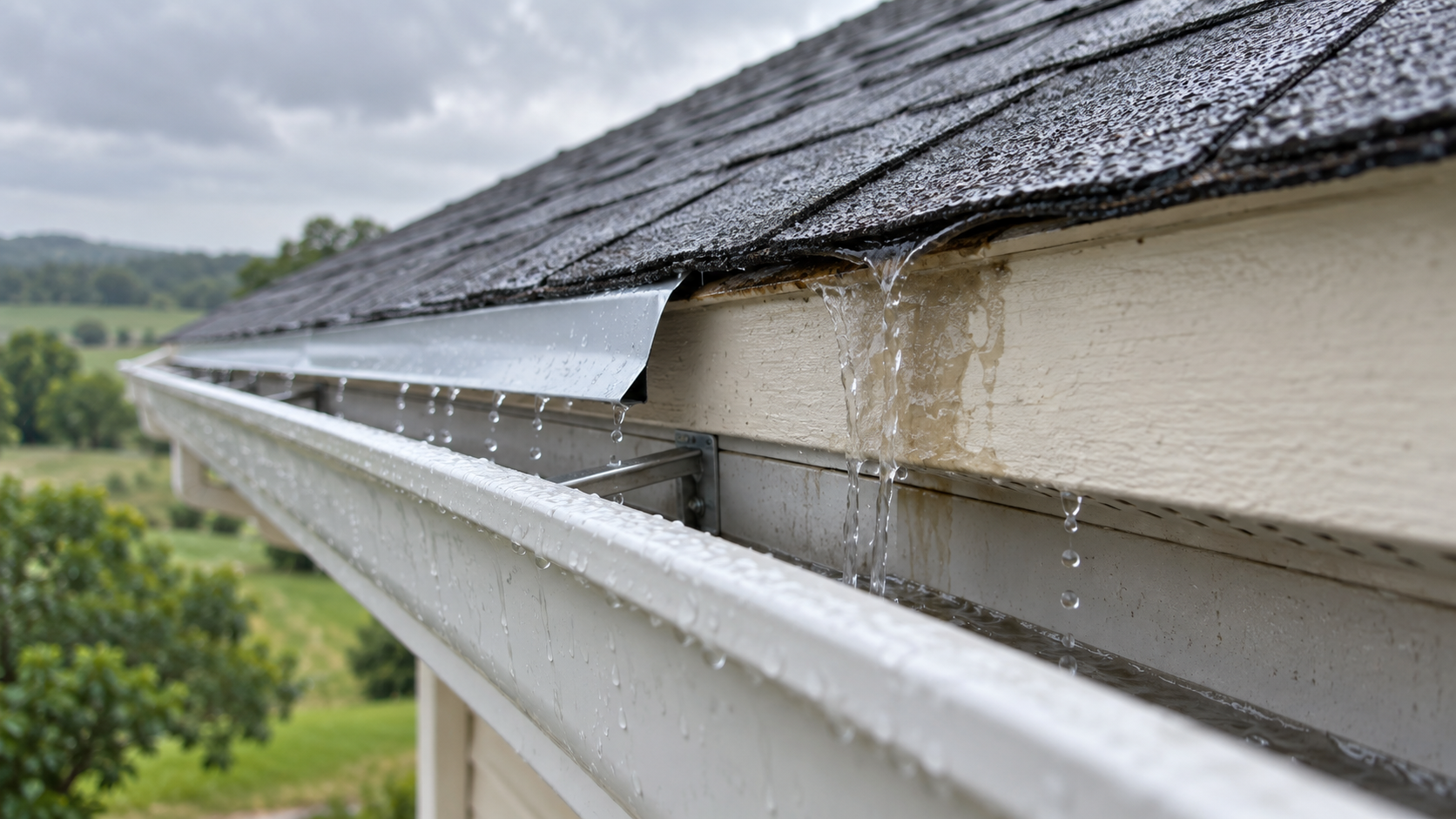
- Windblown water driving behind the gutter, which soaks the fascia from the back where you cannot see it.
- Downspouts torn off the wall where straps have loosened.
Wind damage tends to be cumulative, which is exactly why it gets denied on claims and why it is worth catching early. We re-secure and re-pitch runs so they drain correctly again, which is ordinary repair work and far cheaper than a replacement.
Your Post-Storm Walkaround
Do this from the ground, the day the weather clears. Take photos of everything, dated, before anyone touches it.
- Walk the full perimeter and look up the line of each run for a sag, wave, or dip that was not there before
- Check for any gap between the back of the gutter and the fascia board
- Look for dents on the gutter face and, where you can see it from an upstairs window, inside the trough
- Note any crushed or flattened section of gutter guard or hood
- Check every downspout for dents, splits, and whether the straps are still holding it to the wall
- Look at where each downspout discharges and whether the storm moved the extension
- Look for fresh dirt lines or streaking on siding and fascia, which marks where water went over the edge
- Check the ground and beds below the gutter line for washed-out mulch or new erosion channels
- Look in the trough for shingle granules, and for grit washed onto the driveway or walks
- Check for downed limbs resting on or near the roof edge
- Note any spot where water is still dripping hours after the rain stopped
Photograph the whole elevation and then the specific damage close up. Wide shots establish the location, close shots establish the damage, and adjusters want both.
What Insurance Usually Covers
We are a gutter company, not your adjuster, and every policy is written differently. So treat this as what to ask about rather than what to expect.
Generally speaking:
- Sudden storm damage from a covered event is the category gutters fall under. Hail and wind damage from a specific dated storm is typically what gets considered.
- Gradual wear, age, and rust are typically excluded. This is why cumulative wind loosening over several years is a hard claim.
- Lack of maintenance is a common denial reason. A trough that failed because it was packed with debris is a maintenance argument, not a storm argument.
- Gutters are often bundled into a roof claim rather than assessed separately, which means they can get overlooked if nobody raises them.
- Cosmetic dents may or may not be covered depending on your policy language. Functional damage is a stronger position than appearance.
Practical steps that help:
- Report the claim promptly and reference the specific storm date
- Provide your dated photos from before anything is repaired
- Ask explicitly whether gutters and downspouts are included in the scope, and get the answer in writing
- Get a written assessment of the gutter damage separately from the roof scope
- Do not authorize repairs before the adjuster has seen it, unless something is actively causing water damage
We can document what we find on your gutters in writing after the free on-site evaluation, which gives you something concrete to hand over. What we will not do is tell you what your policy covers, because we genuinely do not know and guessing helps nobody.
Roof First, Gutters Second
This is the part homeowners get wrong most often, and it costs real money.
If your roof is being replaced after a storm, the roof goes first and the gutters go second. Roof work means tear-off debris coming over the edge, ladders and equipment against the fascia, and crews moving along the roofline. Brand-new gutters underneath that will get damaged.
The sequence that works:
- Adjuster inspects and the scope is settled
- Old gutters are removed, usually the day before roofing starts
- Roof is replaced
- New gutters are installed, sized to the new roof
- Downspout discharge is checked and corrected
That is exactly how the hailstorm job we mentioned earlier was handled, and it is why it went smoothly. You can read what customers say about that work on our reviews page.
One more reason the order matters: a new roof can change how water comes off the edge, particularly if drip edge or underlayment details change. Sizing the gutters after the roof is done means sizing them to what the roof actually does now.
Repair or Replace After a Storm
Storm damage does not automatically mean a new gutter system. Most of what we see after a North Texas spring storm is repair work.
Usually a Repair
- Loose, bent, or backed-out hangers on an otherwise sound run
- Pitch knocked out of alignment so water pools instead of draining
- A separated seam or a leaking joint on a sectional system
- A single detached section at a corner or end
- A crushed or torn-off downspout
- Straps that have pulled away from the wall
- Debris packed in the trough
Most of this is gutter repair work that restores the system you already have.
Usually a Replacement
- Dents across most of the length of a run rather than in a few spots
- A trough that is rusted through, not just stained
- Hangers pulling out of fascia that is too soft to hold new fasteners
- A gutter that was already undersized for the roof and is now also damaged
- Repeated failures at the same spot across multiple storms
- A sectional system where several joints have failed at once
Gutter replacement is the right call when the underlying system was already at the end of its service life and the storm finished it. Our seamless gutters are aluminum, fabricated on-site and formed to the exact length of each section, which removes the joints that tend to fail first. Most residential homes are fitted in a single day.
Two things that push the decision toward replacement regardless of the dent count: fascia that is too far gone to hold hardware, and a system that was undersized to begin with. Neither gets fixed by straightening metal.
Spring Cleanup Is Part of Storm Recovery
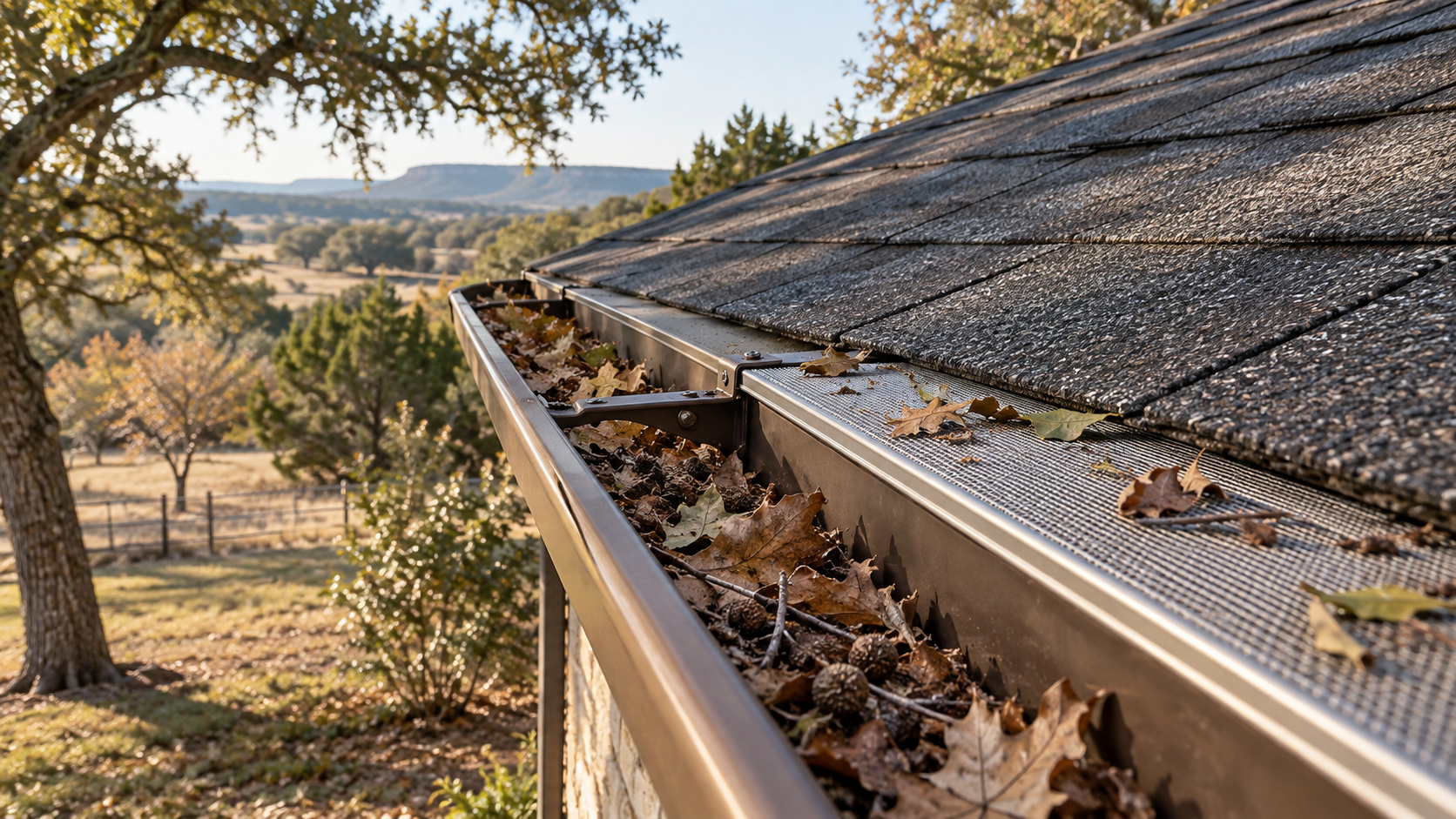
The storm is not the only thing loading your gutters in March. Spring drops seed pods, catkins, pollen, and early leaf litter, and mature trees around many Acton properties mean steady leaf and seed drop throughout the season.
That matters after a storm for a specific reason. A trough carrying storm debris and spring drop together will overflow in the next rain even if nothing is structurally wrong with it. Homeowners regularly read that overflow as damage when it is a blockage.
A full-channel gutter cleaning and inspection restores flow and, more usefully right now, tells you which problems are real. Clear the debris first and whatever still leaks, sags, or overflows is the actual damage. That is a much better foundation for a claim conversation than guessing.
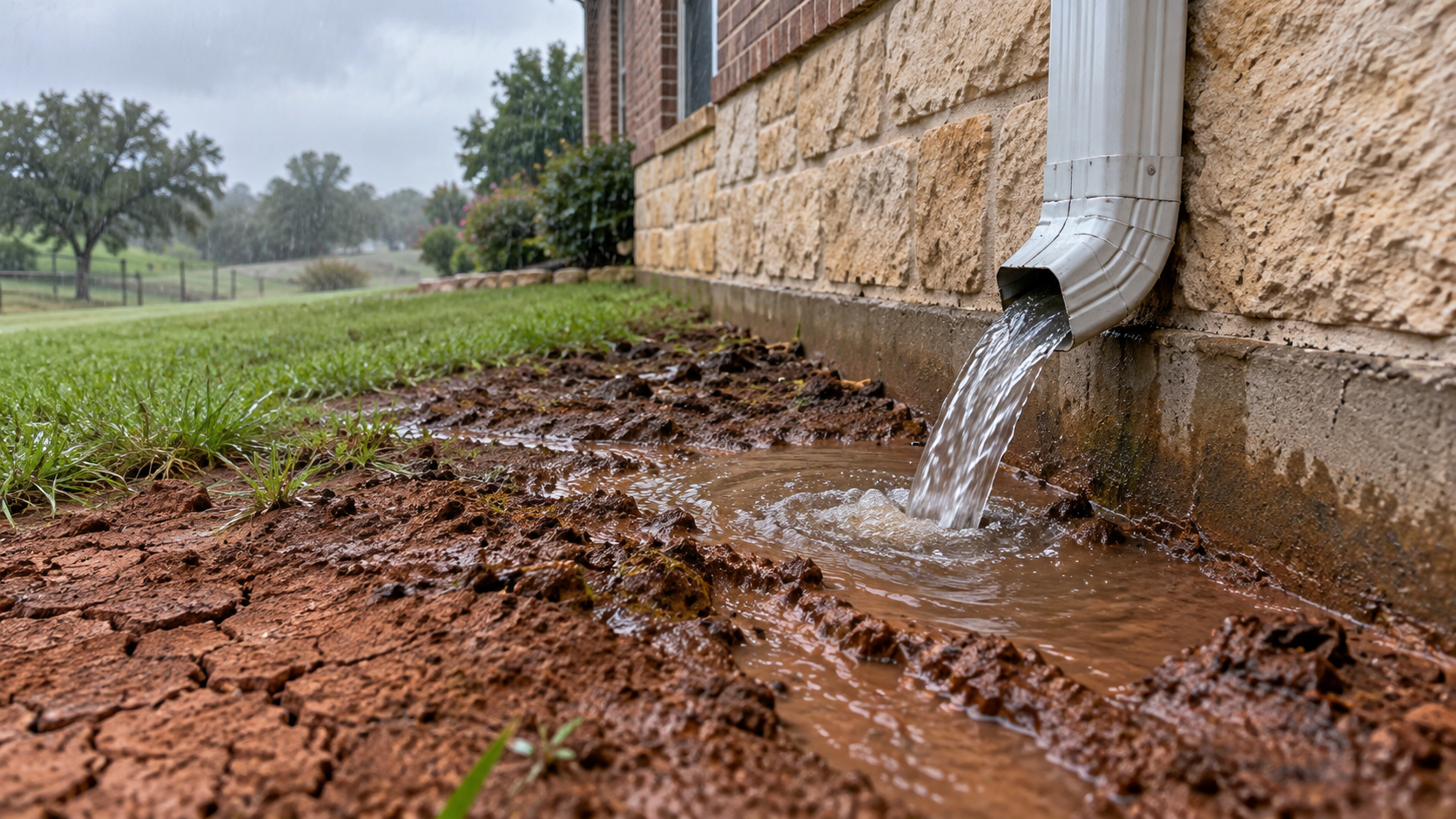
Standing water near a foundation close to the lake is worth taking seriously, and that is the real stake in spring. Water that goes over the edge instead of down the downspout lands at the base of the wall, repeatedly, through the wettest months of the year.
Why Acton Homes Need a Closer Look
Acton sits right along Lake Granbury, and that changes the exposure profile in ways that matter after a storm.
Lake-facing homes near Acton State Historic Site deal with extra humidity and shifting winds off the water. Humidity keeps things damp for longer after the rain, which is hard on fascia and on anything with a broken finish. Shifting wind means load on the gutter from directions the hardware was not really planned around, and it is why hangers and fasteners here loosen faster than they do inland.
Add mature trees and the picture is specific: a system that is being worked loose year-round, then loaded with debris every spring, then hit by hail and wind. Each factor is manageable alone. Together they are why an Acton gutter run rarely fails for one single reason.
Older Acton homes with rusted or undersized gutters get a right-sized seamless system built to handle the water volume off the actual roofline, which is a different question from whether the old one was dented.
We cover Acton from our office at 1019 Davis Road in Granbury, a short drive up the road. See the full Acton service area page for what we handle locally. We are a Granbury-based team, not a call center dispatching to whoever is available, which after a hailstorm is worth something. Storm season brings a lot of out-of-town crews through Hood County, and most of them will not be here next spring.
A Word About Post-Storm Door Knockers
After every significant hailstorm, crews arrive in Hood County who were not here the week before. Some are legitimate. Many are not.
What to watch for:
- Someone offering to "handle the whole claim" for you, including the paperwork
- An offer to waive or absorb your deductible, which is a problem for you and not just for them
- Pressure to sign anything on the spot, especially an assignment of benefits
- No local address, or an address that is a mailbox
- A price quoted before anyone has looked at the actual roofline
- Insistence that the damage must be handled today
Reasonable requests on your side: a physical local address, proof of insurance, a written scope, and time to think. Anyone who objects to those has told you what you needed to know.
We have had a customer describe a competitor waiting for our truck to leave and then knocking on the door to upsell them. That is the environment. Getting a second opinion is completely fair. Getting a second opinion from someone who followed a truck to your house is a different thing.
Frequently Asked Questions
Does hail damage gutters or just the roof?
Hail damages both. Gutters take dents on the trough and face, crushed guards or hoods, and chipped finish, and the impacts often knock hangers loose. Gutters are frequently overlooked because a roof claim dominates the conversation, so raise them specifically.
Will insurance cover my gutters after a hailstorm?
It depends on your policy, and we cannot tell you what yours covers. Sudden damage from a dated storm event is typically the category that gets considered, while age, rust, and gradual wear are typically excluded. Ask your adjuster directly whether gutters and downspouts are in the scope, and get the answer in writing.
How can I tell if hail dents on my gutters are cosmetic or serious?
The test is whether water still moves correctly. Scattered surface dents on a run that drains properly are cosmetic. Dents across most of a run, a dished trough that holds standing water, a crushed guard, or a damaged downspout are functional problems. An inspection after the trough is cleared gives you a reliable answer.
Should I replace my roof or my gutters first?
Roof first, then gutters. Roof tear-off sends debris over the edge and puts ladders and crews against the fascia, which will damage new gutters. Remove the old gutters before roofing, then install the new system after, sized to the finished roof.
How do I know if the storm damaged my gutters or they are just clogged?
Clear the gutters and see what is left. Overflow from a packed trough looks identical to overflow from a damaged one. After a full-channel cleaning, anything that still sags, leaks, or spills over is real damage.
Do shingle granules in my gutters mean anything?
Yes, and it is one of the most useful signals available to you. A heavy load of granules in the trough after a storm indicates the roof surface took impact. Granules are also abrasive and hold water in the channel, so they are worth clearing either way.
Can wind alone damage gutters without hail?
Yes, and in Hood County wind is the more common cause. Uplift on the front edge of a gutter loads hardware in the direction it was never meant to carry, which loosens fasteners over time and detaches sections in a strong storm. Lake-adjacent homes see this faster because of shifting winds off the water.
How soon after a storm should I have gutters looked at?
Do your own photo walkaround as soon as the weather clears, because dated photos taken before any repair are what support a claim. Then get an inspection before the next significant rain, since a compromised gutter dumps water at the foundation every time it rains.
Are dented gutters worth repairing or should they be replaced?
Both are common outcomes. Loose hangers, lost pitch, a failed seam, or one detached section are repairs. Dents along most of a run, a rusted-through trough, fascia too soft to hold fasteners, or a system that was already undersized point to replacement.
Get Your Gutters Looked At Before the Next Storm
North Texas is not done with hail in March, and a gutter that is already compromised will not hold up to the next round. If a storm has come through your part of Acton, Granbury, or anywhere else along the lake, get it assessed while you still have dated photos and time to file.
Call (817) 326-3682 for a free on-site evaluation. We are open Monday through Friday from 8am to 5pm and Saturday from 9am to 1pm. Tell us what you saw after the storm and we will look at the whole system, not just the spot that caught your eye, and put what we find in writing.