How to Clean Your Gutters Safely in De Cordova, TX (and When to Stop)
A straight walkthrough of cleaning your own gutters: the tools that work, the order to do it in, how often it needs doing on a tree-covered lot, and the specific situations where you should get off the ladder.

Have a gutter question about your Granbury home?
Call (817) 326-3682We clean gutters for a living, so a guide explaining how to do it yourself might seem like an odd thing for us to publish. Here is our reasoning: plenty of homeowners are going to do this themselves regardless, and the ones who get hurt or make it worse are usually the ones who went up a ladder without a plan.
So this is the real version. The tools that work, the order that works, how often it actually needs doing in Hood County, and the specific circumstances where the right move is to come back down and pick up the phone.
May is a good month for it. Spring drop is finished, summer storms have not started, and anything you clear now buys you a clean channel through the wettest part of the year. If you would rather not do it at all, call us at (817) 326-3682 for a free on-site evaluation.
How Often Gutters Actually Need Cleaning
Twice a year is the number everyone quotes. It is roughly right for an open lot with no trees near the house, and roughly wrong for most of the lake communities around Granbury.
What decides your frequency:
- Tree cover within reach of the roof. This is the dominant factor by a wide margin. Not trees on the property, trees whose canopy overhangs or sits near the roofline.
- Species. Pines drop needles nearly year-round. Oaks deliver catkins in spring and leaves in fall, plus acorns. Pecans drop heavily and drop hard.
- Roof pitch. Steeper roofs shed debris toward the gutter more efficiently, which loads the channel faster.
- Whether you have guards. A well-fitted guard system meaningfully cuts down on how often gutters clog, but it does not eliminate the need to check them.
- Recent storms. One storm can undo a cleaning, and it does not care what the calendar says.
De Cordova Bend sits directly on Lake Granbury, and homes throughout the community deal with steady lake humidity, mature shade trees, and long rooflines built around the water view. Full-channel cleaning matters more on tree-covered lakefront lots, where debris builds up faster than on open properties. With heavy tree canopy common throughout De Cordova, three to four times a year is a more realistic baseline than two.
The honest answer is that frequency is set by your specific lot, not by a rule. Look in the gutter. If you can see debris, it is time, and if you cannot see into the gutter at all, it is past time.
What Happens If You Skip It
Not to be dramatic about leaves, but the failure chain is real and it goes in a predictable order.
- Debris blocks flow and water sits in the channel instead of moving
- Standing water adds weight, which loosens hangers and pulls the run out of pitch
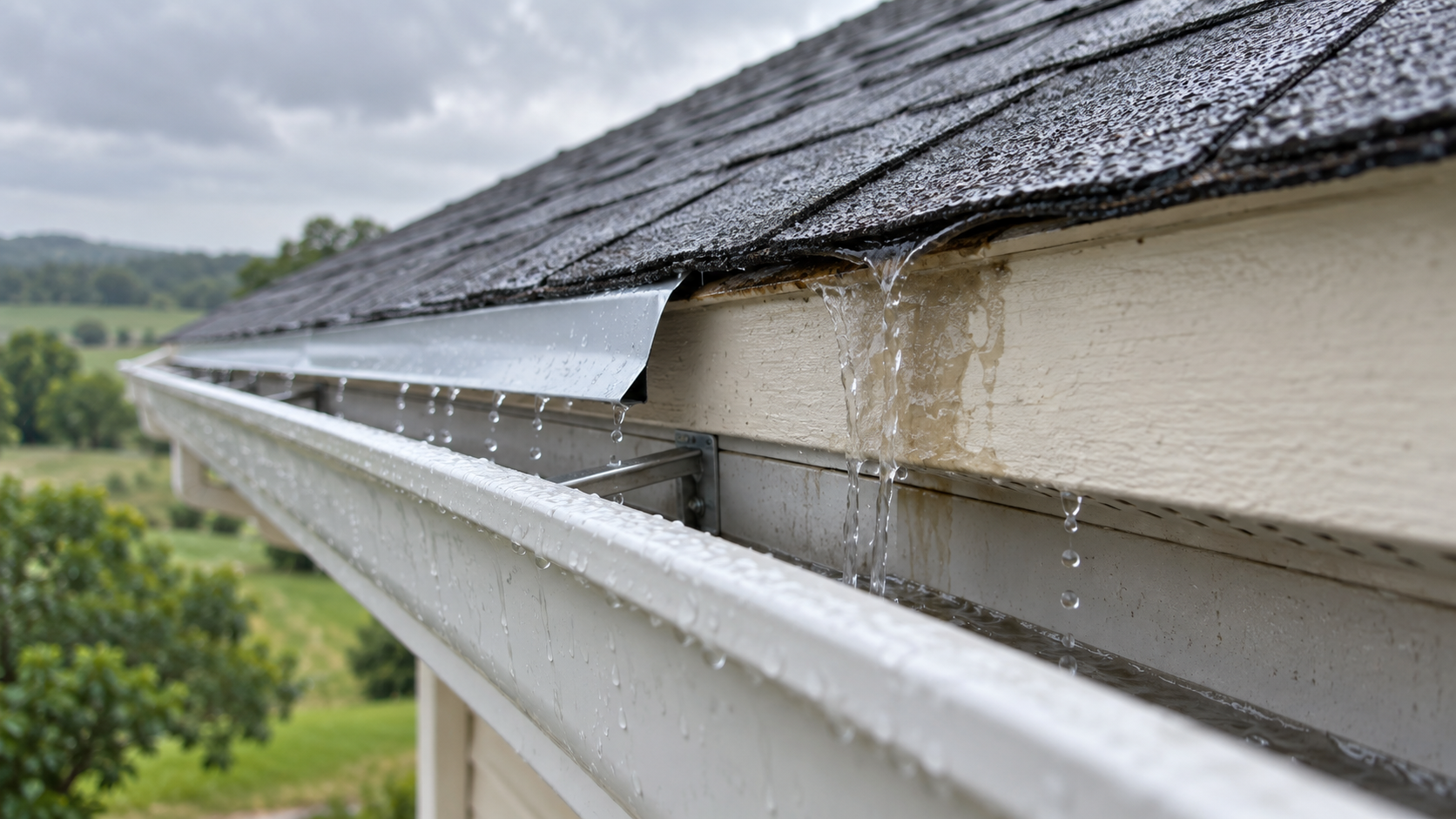
- Water overflows the back edge and soaks the fascia board, where you cannot see it
- Wet fascia softens, and soft fascia will not hold gutter fasteners
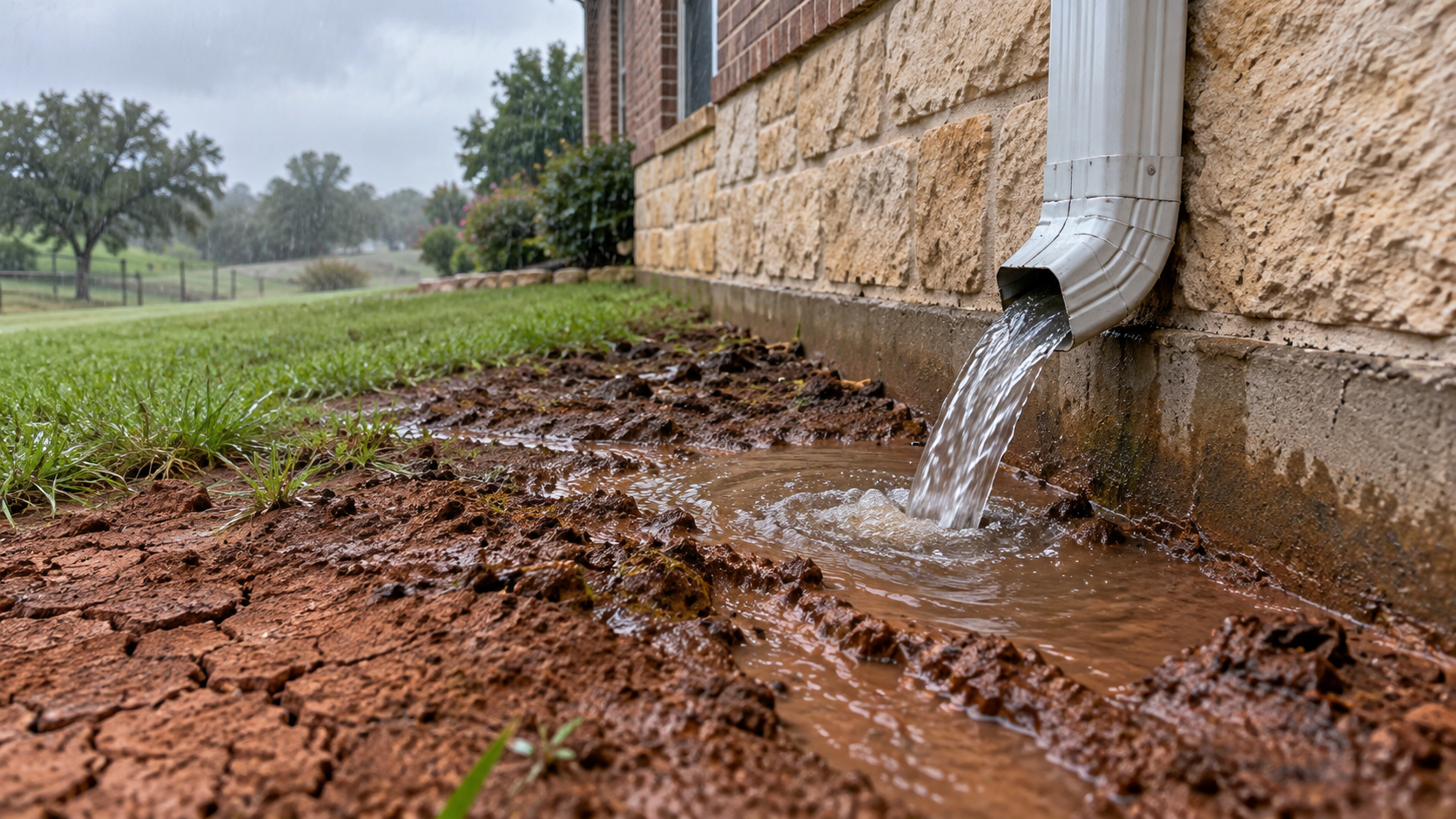
- Overflow at the front lands at the base of the wall, repeatedly
- Water at the foundation becomes a foundation conversation, which is a much larger bill than a gutter one
Lake humidity and mature tree cover put extra strain on fasteners and seams, and standing debris in a humid channel is a slower drying, longer contact situation than the same debris on a dry inland lot.
There is also the part nobody mentions: a packed gutter is a nesting site and a mosquito nursery, which near the lake in summer is its own argument.
The Tools That Are Worth Owning
You do not need much, and the expensive gadgets are mostly not the ones that work.
- A fiberglass extension ladder of the right height, with a stabilizer or standoff. The standoff is the single best purchase on this list — it holds the ladder off the gutter so you are not resting your weight on the thing you are trying to repair.
- A bucket with a hook, or a small tarp on the ground. Working with one hand free matters more than working fast.
- Gloves you do not mind ruining. Gutter debris hides screws, sheet metal edges, and wasp nests.
- A gutter scoop, plastic rather than metal. Metal scoops gouge the inside of an aluminum trough, and a scratched channel holds debris.
- Safety glasses. Everything you dislodge goes somewhere, and some of it goes toward your face.
- A garden hose with a pistol nozzle, for flushing after the bulk is out.
- A plumber's snake or a flexible drain auger for a genuinely blocked downspout.
Things sold for this that mostly disappoint: leaf-blower gutter attachments, which move dry debris around and do nothing to wet debris; pressure washers, which will drive water behind the gutter and blast sealant out of seams; and most from-the-ground grabber tools, which work on a single-story ranch and nowhere else.
If you are looking at cleaning gutters from the ground because the ladder feels wrong, treat that instinct as information rather than a problem to engineer around.
Ladder Safety, Which Is the Whole Job
Falls from ladders during routine home maintenance put people in the hospital every year, and gutter cleaning is one of the most common reasons homeowners are up one. This section is not filler.
- Set the ladder at roughly a four-to-one angle. One foot out from the wall for every four feet of height.
- Both feet on level, solid ground. Lake lots slope. Beds are soft. A ladder foot that sinks an inch mid-job is how this goes wrong.
- Never rest the ladder on the gutter. It dents the trough, and aluminum is not load-bearing. Use a standoff.
- Keep your hips between the rails. The moment you reach past that, your weight is outside the ladder's base.
- Move the ladder instead of stretching. Reaching sideways is the single most common mistake, and on De Cordova's longer rooflines it is tempting constantly.
- Three points of contact. Which means the bucket hangs from a hook, not from your hand.
- Have someone home. Not holding the ladder necessarily, just present and aware you are up there.
- Never on a wet roof, in wind, or near anything electrical. Service drops and downspouts share space more often than you would like.
- Do not get on the roof to reach the gutter. Different job, different risk, different equipment.
Lakefront homes in De Cordova often have longer, more custom rooflines built around the view. That is a real complication here: more linear feet means more ladder repositioning, and the fatigue that builds over twenty repositions is what produces the shortcut on the twenty-first.
The Actual Procedure
Work in this order. It matters, because flushing before you scoop just turns loose debris into packed sludge in the downspout.
- Walk the perimeter first. Note where downspouts are, where the ground is uneven, and where the runs are longest. Plan your ladder positions before you climb.
- Start at the end furthest from a downspout and work toward it. You are pushing debris in the direction it needs to go anyway.
- Scoop the bulk out by hand, into the bucket. Dry debris is much easier than wet, which is why you pick a dry day.
- Reposition and repeat down the length of the run. Do not reach. Ever.
- Once the whole run is scooped, flush with the hose from the far end toward the downspout. Use moderate pressure.
- Watch the downspout discharge while you flush. Full flow means clear. A trickle or a backup means a blockage.
- Clear a blocked downspout from the bottom up with a snake or auger where possible. Tapping along the length will often locate the clog.
- While you are flushing, watch for leaks. Drips at seams, at end caps, at the downspout outlet, and any water appearing behind the gutter.
- Check the pitch. Water should move, not pool. Any section holding standing water after the flush has a pitch or sag problem.
- Look at the fascia behind and below the gutter. Staining, softness, or peeling paint is the thing you actually came up here to find.
- Check where the downspout discharges and whether it carries water away from the foundation or into a bed beside it.
That inspection at steps 8 through 11 is worth more than the cleaning. The cleaning is maintenance. The inspection is how you catch a repair while it is still a repair. Our gutter cleaning and inspection service is built around exactly that pairing, because clearing a channel without looking at what the channel is telling you is half a job.
When to Stop and Call
No pressure framing here, just the honest list. If any of these describe your situation, the math stops favoring doing it yourself.
- A two-story elevation. The difference in consequence between a one-story fall and a two-story fall is not incremental.
- A steep roof pitch where the gutter is hard to reach without leaning.
- Wet, mossy, or soft ground where you cannot set a ladder with confidence.
- No standoff and no intention of buying one.
- Any balance, joint, strength, or medication issue. This is not a place to find out.
- Nobody home with you.
- A downspout you have snaked and cannot clear. Blockages at an elbow sometimes need the section opened, which is repair work.
- Water appearing behind the gutter, which usually means flashing, drip edge, or fascia rather than debris.
- A visible sag, a separated seam, or loose hangers. Cleaning around a failing run does not fix it, and adding your weight to it is a bad idea.
- Wasp or hornet activity in the channel.
- Soft or rotted fascia. That gutter's fasteners are compromised, which means the gutter is not a stable thing to be near.
- Roofs you would need to get on to reach.
If the answer is that you are going to do it anyway, do it on a dry morning, with a standoff, with someone home, and take the twenty extra minutes to move the ladder instead of reaching.
Can You Just Not Clean Them?
Sort of, and this is the legitimate version of that question.
Gutter guards reduce how often the channel fills, and on a heavily canopied lot that difference is substantial. What they do not do is make the system maintenance-free. Guards still need checking, fine debris still accumulates, and a guard that has been crushed or displaced by a limb will actively make things worse by routing water over the front edge.
The realistic outcome with a well-fitted guard system is fewer cleanings and a much shorter cleaning when it happens, not zero. Anyone selling you never again is overselling.
Where guards make the most sense is exactly the situation this post describes: a two-story lakefront home with long runs, heavy canopy, and an owner who does not want to be on a ladder four times a year. That is a real reason to look at gutter guards, and it is a better reason than the debris itself.
What a Professional Cleaning Should Include
If you do hire someone, for this or anything else, here is what separates a real service from a blower and a truck.
- Full-channel clearing by hand, not just blowing the top layer
- Downspouts flushed and confirmed flowing, not assumed
- Debris removed from the property, not left in your beds
- A pitch check so standing water gets identified
- A seam, hanger, and end-cap inspection while the channel is visible
- A look at the fascia behind and below the run
- Downspout discharge checked for where the water actually goes
- Findings told to you plainly, including when the answer is that everything is fine
That last one is the tell. We repair the failure point directly instead of just addressing the visible drip, and the same principle applies to cleaning: the point is to leave knowing the condition of the system, not just to leave it empty.
We are a Granbury-based team, not a call center dispatching to whoever is available, so the person who cleans your gutters is someone you can ask questions of.
Frequently Asked Questions
How often should you clean gutters?
Twice a year suits an open lot with little tree cover. Under heavy canopy, three to four times a year is more realistic, and properties with pines or pecans close to the roof may need more. The reliable test is looking in the channel rather than following a schedule.
When is the best time to clean gutters?
Late spring after seed and catkin drop finishes, and late fall after leaves are down. In North Texas a late-spring cleaning is what carries you through summer storm season, and a late-fall cleaning is what keeps water moving during winter freezes.
How do you clean gutters without a ladder?
Not well, for most homes. From-the-ground tools and hose attachments can manage a low single-story roofline with light debris. They do not handle wet or packed debris, they cannot clear a downspout, and they do not let you inspect anything. On a two-story home they are not a substitute.
What happens if you never clean your gutters?
Debris blocks flow, standing water loosens hangers and pulls the run out of pitch, overflow soaks the fascia from behind, and the softened fascia stops holding fasteners. Meanwhile the water going over the front edge lands at the foundation. A cleaning problem becomes a repair problem and then a much larger one. A run that has been neglected long enough eventually needs seamless replacement rather than another scoop.
Can I use a pressure washer on my gutters?
We would not. The pressure is high enough to drive water behind the gutter, blow sealant out of seams, and dent or scratch the trough. A garden hose with a pistol nozzle moves plenty of water for flushing and will not damage anything.
How do I unclog a downspout?
Flush from the top and watch the discharge. If flow is restricted, work a plumber's snake or flexible auger up from the bottom outlet, since pushing a clog downward tends to pack it tighter at an elbow. Tapping along the length often locates it. Blockages that will not clear sometimes require opening the section, which is repair work.
Should I clean my gutters myself or hire someone?
If you have a single-story home, level ground, a standoff for your ladder, and someone at home, doing it yourself is reasonable. A two-story elevation, a steep pitch, unstable footing, or any balance concern shifts the answer. The cost of the mistake is the part worth weighting.
Do gutter guards mean I never have to clean them again?
- Guards meaningfully reduce how often the channel clogs, especially under heavy canopy, and they shorten the job when it comes due. Fine debris still gets through, and a damaged or displaced guard can route water over the edge. Expect fewer cleanings, not none.
How do I know if my gutters have a problem beyond being dirty?
Flush them and watch. Standing water after flushing means a pitch or sag issue. Drips at seams or end caps mean a repair. Water appearing behind the gutter usually points to flashing, drip edge, or fascia. A visible sag or loose hangers mean the run needs repair work rather than another cleaning.
Or Let Us Do It
If you have read the ladder section and concluded this is not your weekend, that is a completely reasonable conclusion and the one most of our cleaning customers reached.
Call (817) 326-3682 for a free on-site evaluation. We are open Monday through Friday from 8am to 5pm and Saturday from 9am to 1pm. We clear the full channel, flush and confirm the downspouts, and tell you what we found on the seams, hangers, pitch, and fascia while we had eyes on it.
We cover De Cordova and the rest of the Lake Granbury communities from our office at 1019 Davis Road. More answers on our FAQ page.